

Duck and Cover: The 1961 Fallout Shelter Boom

Updated: Apr 25
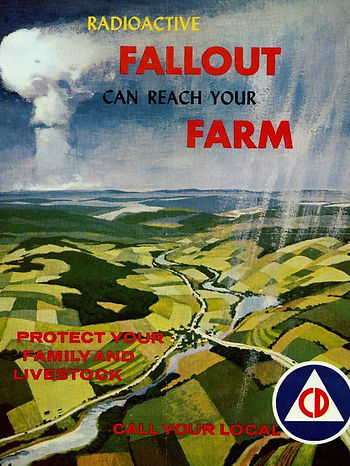
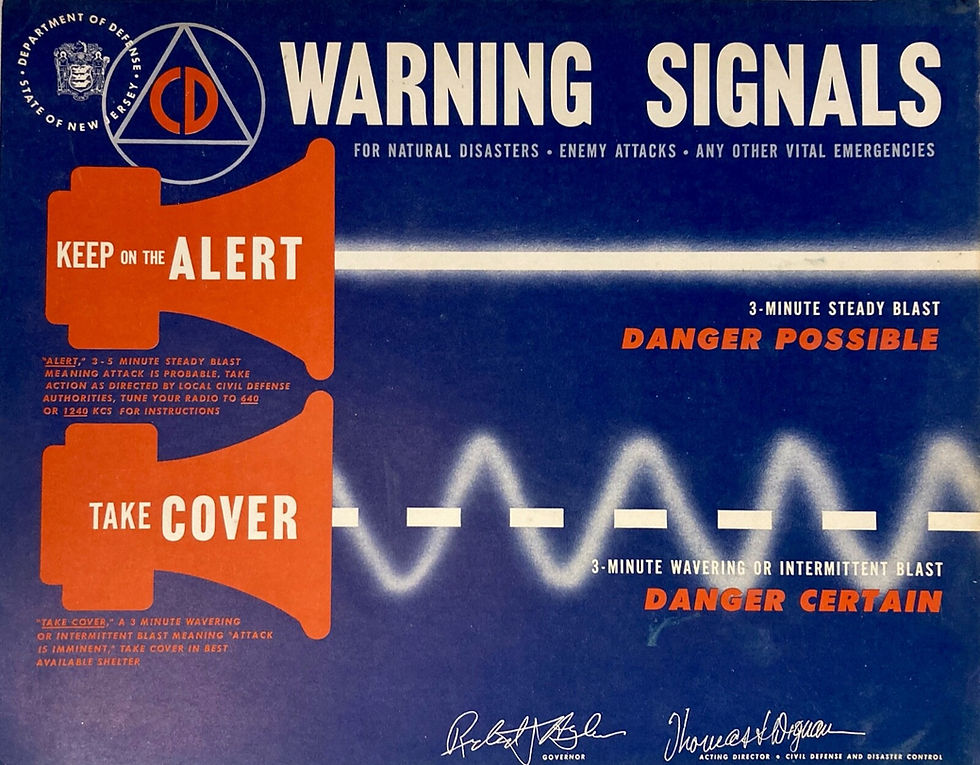
Springfield hummed with anxiety in the late summer and fall of 1961. The Soviet Union had resumed nuclear testing with their biggest bombs to date and the newly-erected Berlin Wall stressed tensions between East and West. Murmurs of an impending war were spreading. The Cold War had the potential to turn hot—radioactively hot.
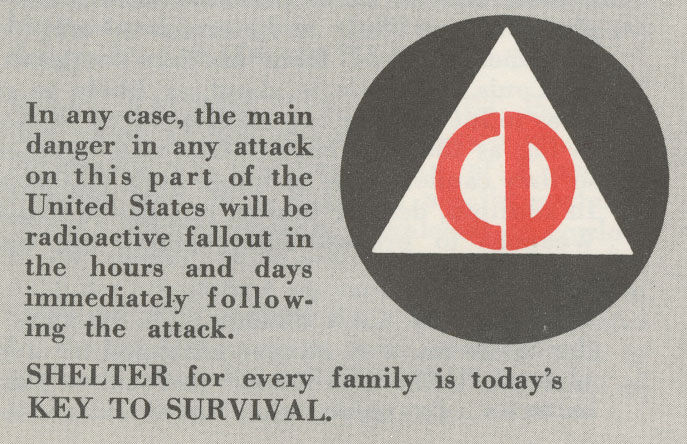
In a letter published in the September 15, 1961 issue of Life magazine, President Kennedy described the National Fallout Shelter Survey and Marking Program. The program aimed to identify existing buildings that could serve as public fallout shelters in the event of a nuclear strike and stock these shelters with supplies. The initiative faced numerous hurdles, including a $20 billion price tag, and could not be immediately implemented. "In the meantime," Kennedy wrote, "there is much that you can do to protect yourself—and in doing so strengthen your nation... The ability to survive coupled with the will to do so therefore are essential to our country." A 13-page article on home fallout shelters followed.
Several questions remained for the American people, many of which were highlighted in a two-page spread in Springfield’s Sunday News and Leader titled “The Big Question: To Build or Not to Build”: What is fallout? How much shelter is needed? How is a shelter built? How much will it cost? What else is needed for survival?
Facing uncertainty, the people of the Ozarks did what gave them a sense of control. They participated in practice drills, stockpiled canned goods, and in 1961, many of them prepared for the worst by building or buying their very own fallout shelters.
1960: The Fraka Family Fallout Shelter Test
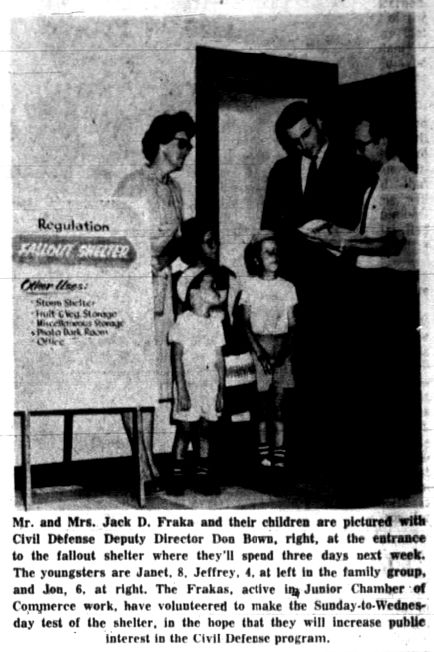
Following a test of the local air raid warning system, Greene County Red Cross Disaster Chairman Robert Marshall had this to say: “It is our belief that Springfield is ill prepared to meet a national defense emergency of devastating proportions due to general public apathy.” Don Bown, Deputy Director of Civil Defense in Springfield and Greene County, took it upon himself to dissuade the region of its apathy. In response to the chairman’s claim, Bown attested that “a group of very interested people” in Greene County were volunteering their time to work toward civil defense goals. One such group included the Fraka family, who, in August 1960, would spend three days in a basement fallout shelter.
Margaret Fraka and her family entered Springfield's first regulation fallout shelter Sunday, August 14, 1960 at noon and remained there until noon Wednesday. The shelter was built by World War II veteran and real estate developer Ralph K. Manley in his home on West Glenwood Street. During the Frakas' shelter test, Manley lived life as usual in the house above, checking in on them just once Monday night.
The shelter was stocked with supplies including 42 gallons of water, various canned goods, kitchen tools, three bunks, an Army cot, and a set of folding chairs with a table. Equipped with electricity and exceeding regulation size, Manley's shelter afforded its residents a few small comforts.
On the first day, the public was invited to try the handle on the shelter door and receive information on disaster preparedness. A sign outside the shelter advertised peacetime uses for fallout shelters. They could be used as storm shelters, photography darkrooms, offices, or for storage.
The Frakas predicted that the biggest challenge would be keeping the little ones entertained. Because the basement itself provided 90 percent protection against fallout, the children were permitted to run and play outside of the shelter for very brief periods. Before the experiment, the family considered bringing along a portable TV, but Margaret argued that in a real emergency there would not be enough time to move a TV set into the shelter.
Luckily, the Frakas had packed a deep-fryer instead of a TV. When the shelter's hot plate blew out, Margaret filled the deep fryer with water and was able to prepare food using canned heat found among the shelter's supplies. “In the event we didn’t have electricity,” Margaret reflected, “we’d have to have some kind of small cooking unit... I believe foods not requiring cooking are preferable.”
At the end of the 72 hours, the family emerged “in good spirits.”
The Fraka family’s fallout shelter test was intended to raise awareness for civil defense preparedness and to draw attention to an upcoming civil defense forum for housewives. Interest in personal fallout shelters grew, and Ralph K. Manley became one of the many business people offering such assurances. By 1961, there were fallout shelters included in six of the homes he had built, with plans for six more in future projects.
1961: The Fallout Shelter Boom
In September 1961, Don Bown estimated that fewer than one percent of Springfield families had fallout shelters in their homes. Some of these shelters were showcased in the Sunday News & Leader’s spread, “The Big Question: To Build or Not to Build.”
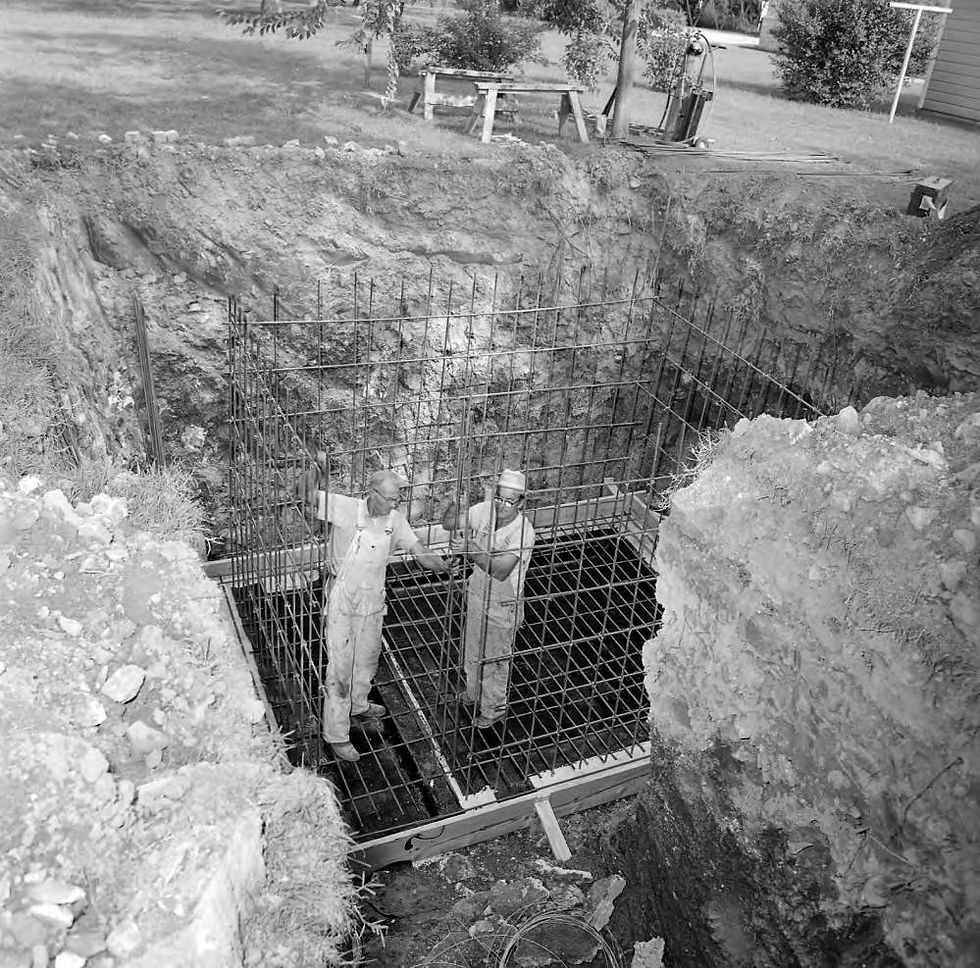
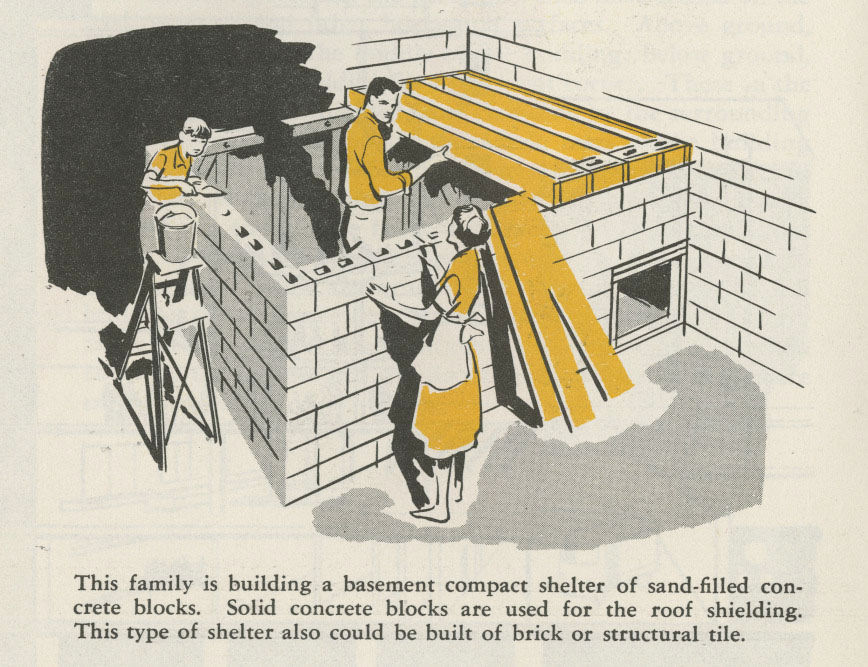
The standard for fallout protection was eight inches of solid concrete, although 12 inches of earth or 30 inches of wood provided similar protection. Homeowners with basements could build shelters relatively easily by adding two concrete-block walls and a ceiling to enclose an earth-backed corner. Those without basements could build an underground fallout shelter in their backyards. Preassembled steel tank shelters were popular, as they required little more than digging a hole.
What about families who didn’t have a fallout shelter? “If a family doesn’t have a fallout shelter,” Bown recommended, “the basement would be their next best shelter. If they have neither of these, they should go to an interior portion of the house, away from outside walls and windows, such as a hallway.”
Disaster readiness required more than just a shelter. Staff writers for the News & Leader provided a checklist of provisions for two weeks in a shelter, based on the guidance of defense officials. Points of interest on this list include 24 bottles of soft drinks, two one-pound packages of instant cocoa, and two jars of cheese—all for one person. The authors of this “survival pantry” list recommended that readers check their supplies at least once a month and replenish their stores regularly.
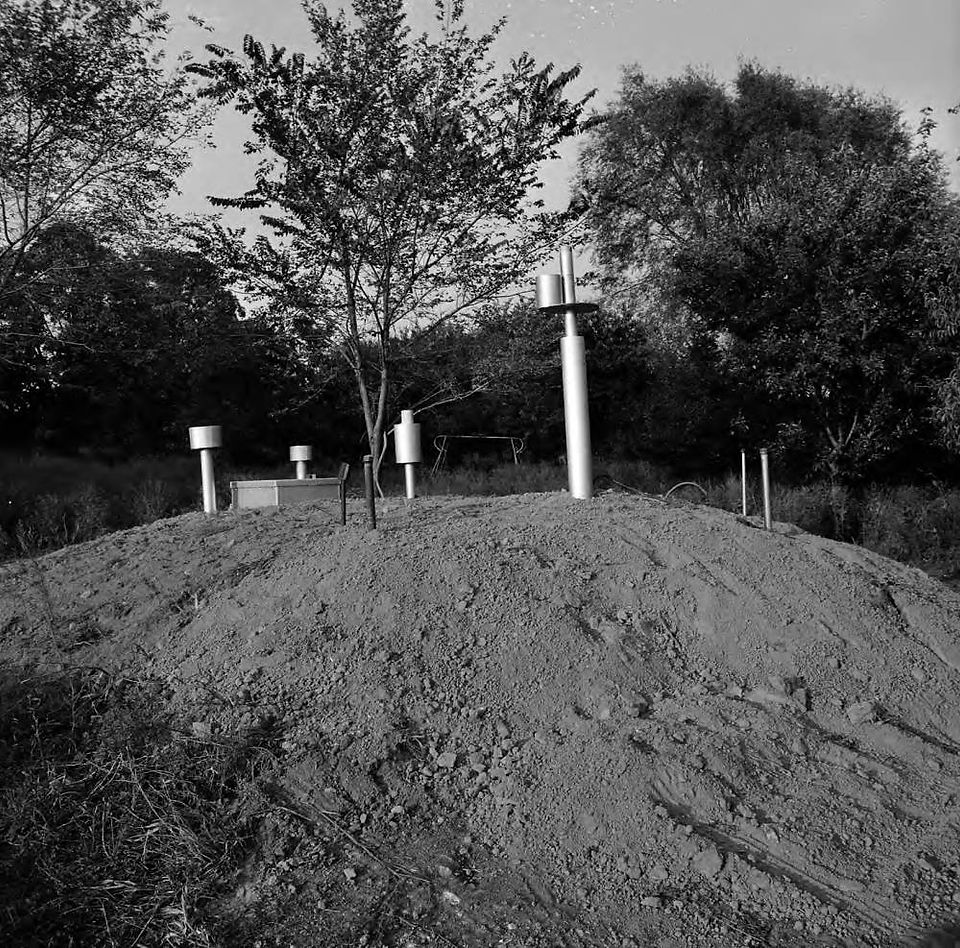
Surface view of Lee Montgomery's fallout shelter. Photograph by News & Leader staff. 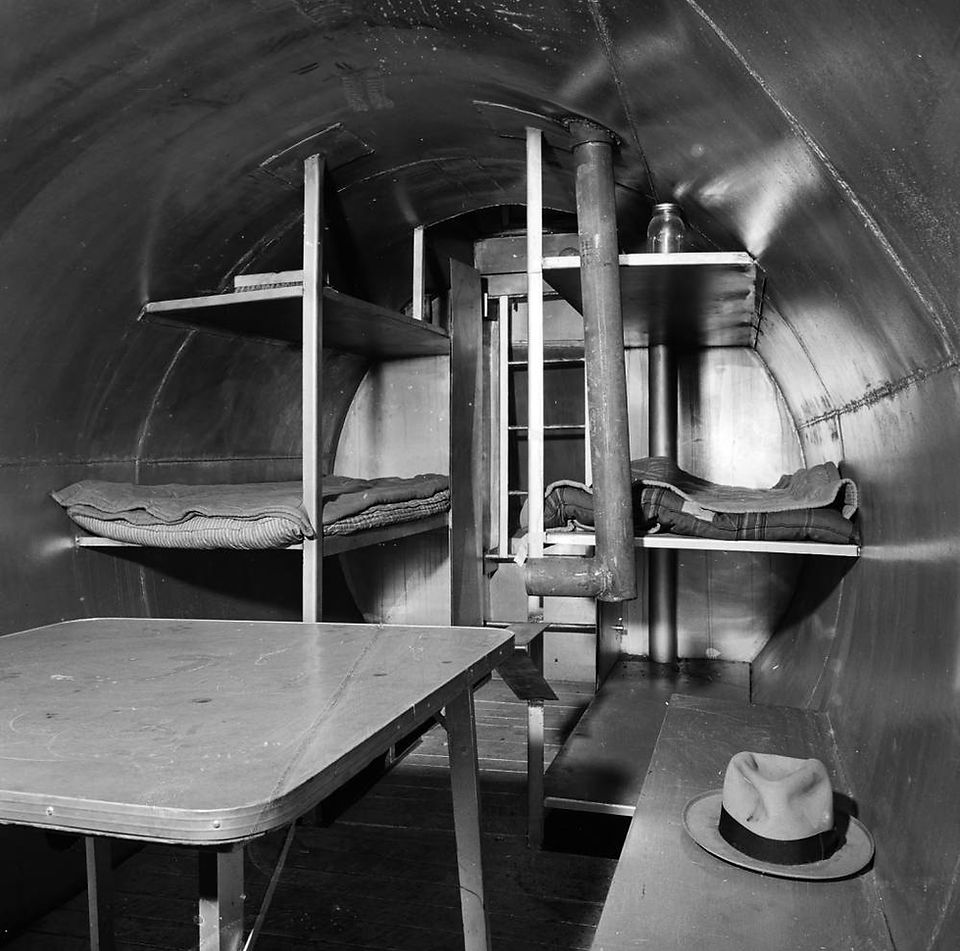
Interior of Lee Montgomery's fallout shelter. Photograph by News & Leader staff. 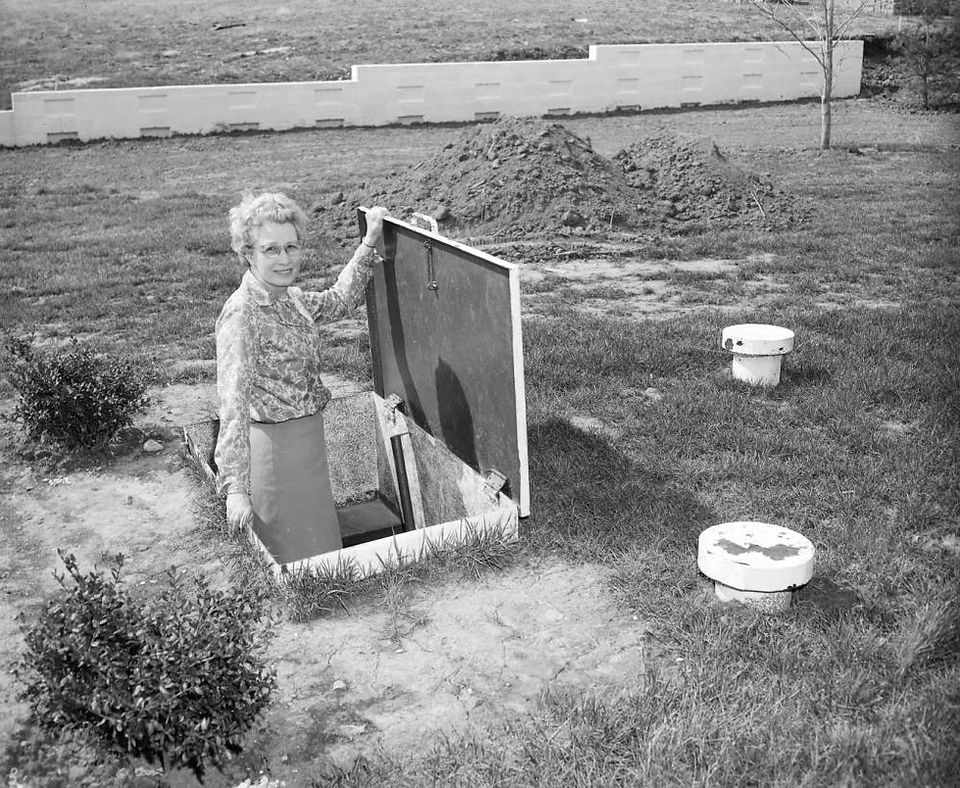
Udell Lawrence stands in her backyard shelter. Photograph by News & Leader staff. 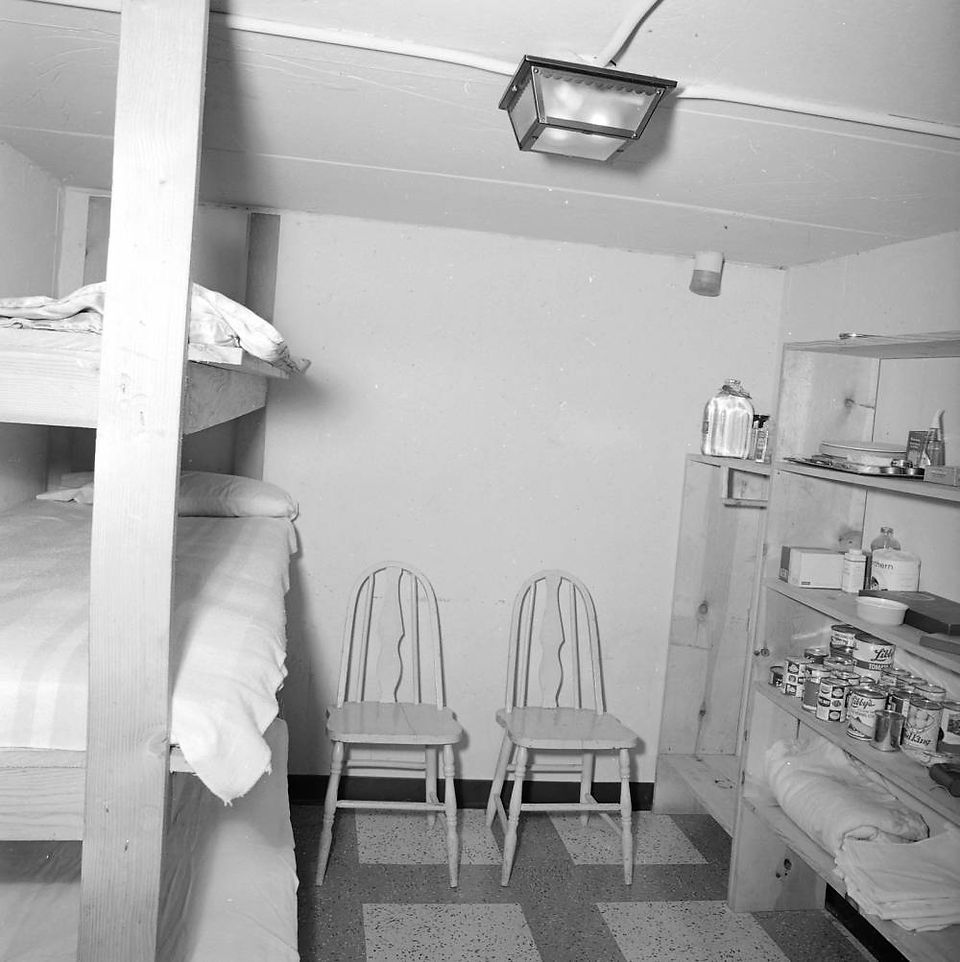
Interior of Margaret and Richard Erb's fallout shelter. Photograph by News & Leader staff.
Do-it-yourself shelters proved too advanced for many homeowners. Some opportunistic companies offered a solution in pre-fabricated shelters that could simply be dropped into a ditch or placed in the corner of a basement. Despite promises of total protection from both blasts and fallout, many of these shelters were poorly made by manufacturers looking to profit off of fear.
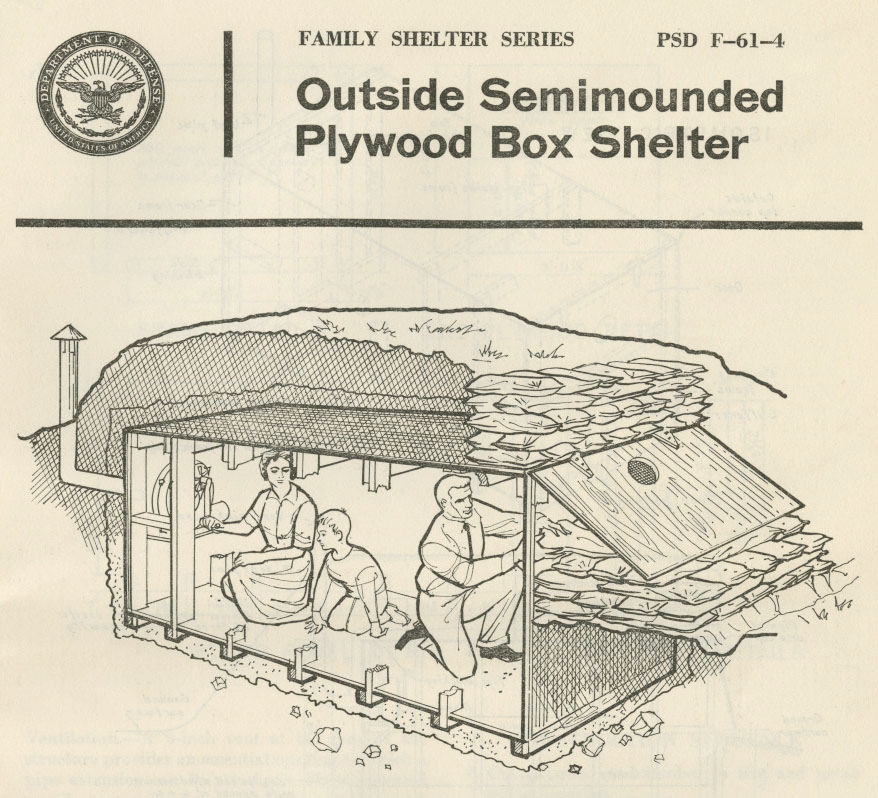
Regulators soon stepped in. The Federal Trade Commission issued new rules on the sale of fallout shelters. These standards were summarized by Springfield Daily News staff writers on December 15, 1961. The FTC emphasized that “no known type of shelter affords absolute, total protection against either fallout or blast,” and that any product claiming otherwise should be thoroughly checked against the agency’s 15-point guide on what does and does not qualify as a fallout shelter. This 1961 guide also laid out rules on how manufacturers could advertise their products. Notably, businesses could not play on the public’s fears through the use of scare tactics or “horror pictures.”
Manufacturers skirted these rules by advertising their products as basic necessities “in the event of an emergency.” Fallout-related products began to appear on store shelves. Survival food kits, packaged water by the gallon, first aid kits, and home radiation detectors could be found in supermarkets, and were advertised alongside newspaper articles about their pervasion and inflated cost.
1962: The Fallout
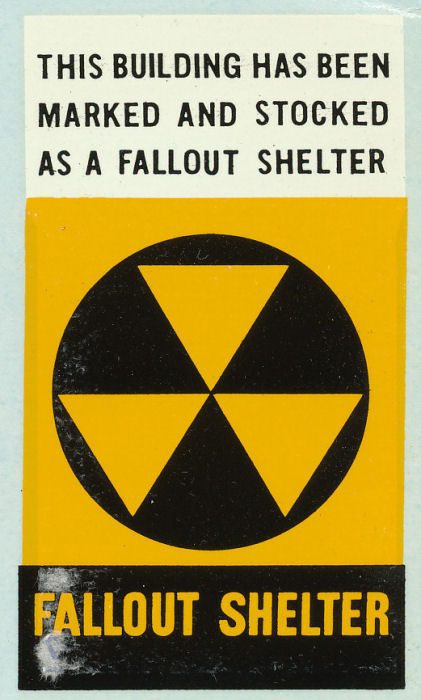
Experts were skeptical of the utility of personal fallout shelters from the start. In the event of a nuclear strike, many Americans would not have enough time to reach an at-home shelter. Odds of survival were highest for families who had spent thousands of dollars on an underground shelter accessible from their basement, ran practice drills often, could clearly hear the sirens from home, and were all quietly together at home when the warning siren sounded. Even under these optimal conditions, how was the average citizen to know if their shelter was one actually built to withstand a blast and fallout, and not one that only pretended to be?
By 1962, many of the companies that sold ready-made shelters and emergency food packs had fizzled out of business as the FTC imposed penalties on sellers that violated their advertising guidelines. At the same time, the federal government had begun giving states the funds and man-power needed to establish community shelters. The consumer public asked themselves: “Was there any need to build personal fallout shelters? Why bother?”
According to a national survey by the Associated Press, many who bought fallout shelters expressed regret. “‘I panicked,’ admits a Denver mother who insisted that her husband build a shelter in their home. ‘We have children and Khrushchev was making all kinds of threats and the newspapers seemed so alarming that I just gave in.’”
Ozarkians who had bought or built shelters realized their potential for other uses. Family fallout shelters can double as tornado shelters without modification. Others converted their shelters into storage closets or home offices. The sentiment surrounding personal shelters in the Ozarks was perhaps like that of Mrs. Margit Bissett of Seattle: “I never go down into it and I hope we never have to. But it definitely is reassuring to have it there.”
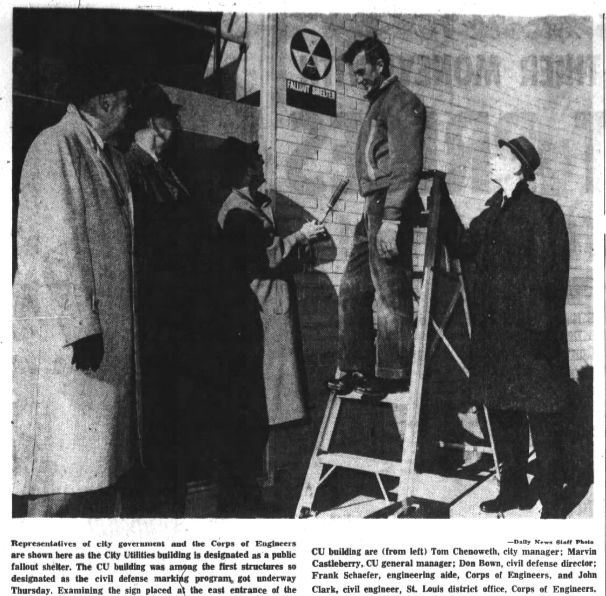
Throughout the fallout shelter boom of 1961, the governing bodies of Springfield and Greene County had been evaluating the viability of existing buildings as fallout shelters. By the end of 1962, Congress had finally approved the funds to stock provisions in community fallout shelters. In Springfield, one of the first buildings to be designated a community fallout shelter was the City Utilities building in December 1962. Springfield and Greene County continued to evaluate, stock, and plan for the worst.
By 1970, nearly 200 existing buildings were listed as emergency community shelters in the Community Shelter Plan for Springfield and Greene County. Natural caves and one mine were also surveyed and approved as community shelters. Officials hoped that the unique geography of the Ozarks could save lives in the event of a nuclear war.
Explore Springfield's caverns and their potential as fallout shelters in Duck and Cover: Cold War Caving.
If you enjoyed this article, please consider making a donation to the Preserving Ozarks History Endowment. Each contribution supports Local History & Genealogy's mission of preserving the history and culture of the Ozarks.
Want more local history news and stories delivered directly to your inbox? Sign up for Local History & Genealogy's newsletter and email announcements.
Resources
“The Big Question: To Build or Not to Build.” Sunday News and Leader, 10 Sept. 1961, pp. 42–43.
Cannel, Ward. "Has Fallout Fear Become Big Business?" Springfield Leader and Press, 11 Jan. 1962, p. 49.
"Confused Shelter Picture Clearer." Springfield Daily News, 15 Dec. 1961, p. 36.
Fair Dodson, Ann. "Three Days in a Fallout Shelter." Sunday News and Leader, 21 Aug. 1960, p. D2.
“Fallout Shelter Test for Frakas.” Springfield Leader and Press, 10 Aug. 1960, p. 13.
“Fallout Shelters.” Life, 15 Sept. 1961, pp. 94–108.
Guides for Advertising Fallout Shelters. Code of Federal Regulations, 8 Nov. 1967, pp. 17–20.
Henshaw, Tom. “Fallout Shelter Boom of ’61 Leaves Red Faces in 1962.” Sunday News and Leader, 22 July 1962, p. A18.
“‘Ill-Prepared For a Disaster.’” Springfield Daily News, 1 June 1960, p. 9.
Kennedy, John F. “A Message To You From the President.” Life, 15 Sept. 1961, p. 94.
“Out of the Shelter.” Springfield Daily News, 18 Aug. 1960, p. 8.
“Shelter All, Jack’s Goal.” Springfield Leader and Press, 6 Oct. 1961, p. 12.
“Shelter Signs Go Up In City.” Springfield Daily News, 14 Dec. 1962, p. 43.
For Further Reading
Bishop, Thomas. "'The Struggle to Sell Survival': Family Fallout Shelters and the Limits of Consumer Citizenship." Modern American History, vol. 2, no. 2, July 2019, pp. 117-38.
Center for Russian, East European, and Eurasian Studies. “Cold War in the Heartland.” University of Kansas.
Green, Eric. “Virtual Shelter Tours.” Civil Defense Museum, Aug. 2024.
Greene County (Mo.) Office of Civilian Defense. City of Springfield & Greene County, Missouri Community Shelter Plan. 1970, Springfield–Greene County Library, Springfield News-Leader Collection.
Schlosser, Eric. Command and Control: Nuclear Weapons, the Damascus Accident, and the Illusion of Safety. Penguin Press, 2013.
Siegel, Gary L. Missouri at Ground Zero: What Nuclear War Would Do to One State. Institute of Applied Research, 1982.