
Springfield Newspapers: A Timeline

Updated: Apr 25
The newspaper history of Springfield, Missouri spans nearly two centuries, from the founding of the Ozark Standard in 1836 to today's Springfield News-Leader. Dozens of papers have come and gone, with some lasting only a few years and others merging into larger operations as the industry consolidated. This timeline focuses on the major publications and pivotal moments of Springfield's newspaper history, as well as key figures whose work is preserved in the Springfield-Greene County Library District's collections. This timeline is not comprehensive, and many newspapers and journalists who contributed to Springfield's media landscape are not specifically profiled.
Local newspapers from as early as 1844 are available to view online in the Springfield Newspapers database. This resource can be accessed at any Springfield-Greene County Library branch or remotely with an active Springfield-Greene County Library card.
Visual Overview
The diagram below provides a simplified lineage of Springfield's longest running publications: the Springfield News-Leader and the Daily Events. Click any underlined title to see its oldest available issue in our digital collection.
The Frontier Press
1837 – 1842: The first Springfield newspaper, the Ozark Standard, was founded by J. C. Tuberville. The Standard changed ownership multiple times, passing from Tuberville to Cyrus Stark, then to E.D. McKenny, the son-in-law of John Polk Campbell. Later, R. A. Huffard acquired the paper and renamed it the Ozark Eagle. The Eagle remained in operation for five years, but no copies of the Standard or Eagle are known to exist today.
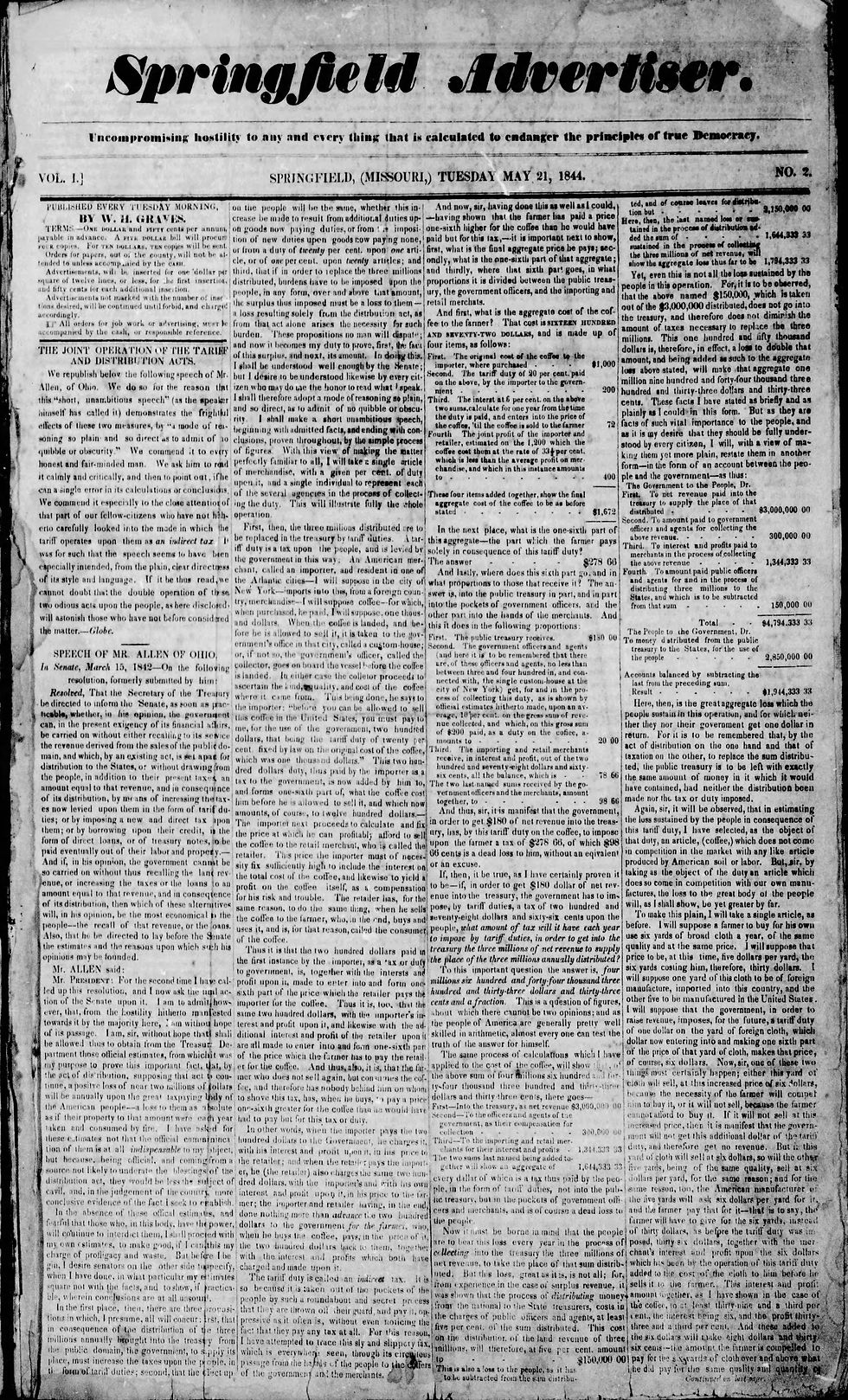
1844: Warren H. Graves, the brother-in-law of Missouri governor John C. Edwards, established the Springfield Advertiser, which was aligned with the Democratic party. The Advertiser is the oldest Springfield newspaper of which known copies survive.
1862: The Missourian was founded by A. F. Ingram and edited by Colonel Charles E. Moss. During its two-year run, the Missourian was the primary publication for abolitionists in Greene County.
1862: The Springfield Journal published its first issue, edited and published by J. W. Boren and A. C. Graves. The Journal aligned itself with the Constitutional Union Party, which aimed to prevent secession over the issue of slavery. While the News-Leader tends to trace its beginnings to the founding of the Springfield Leader in 1867, the Journal is the earliest publication in the News-Leader's direct lineage.
1864: A. F. Ingram established the Missouri Patriot, which replaced the Missourian and was politically Republican.
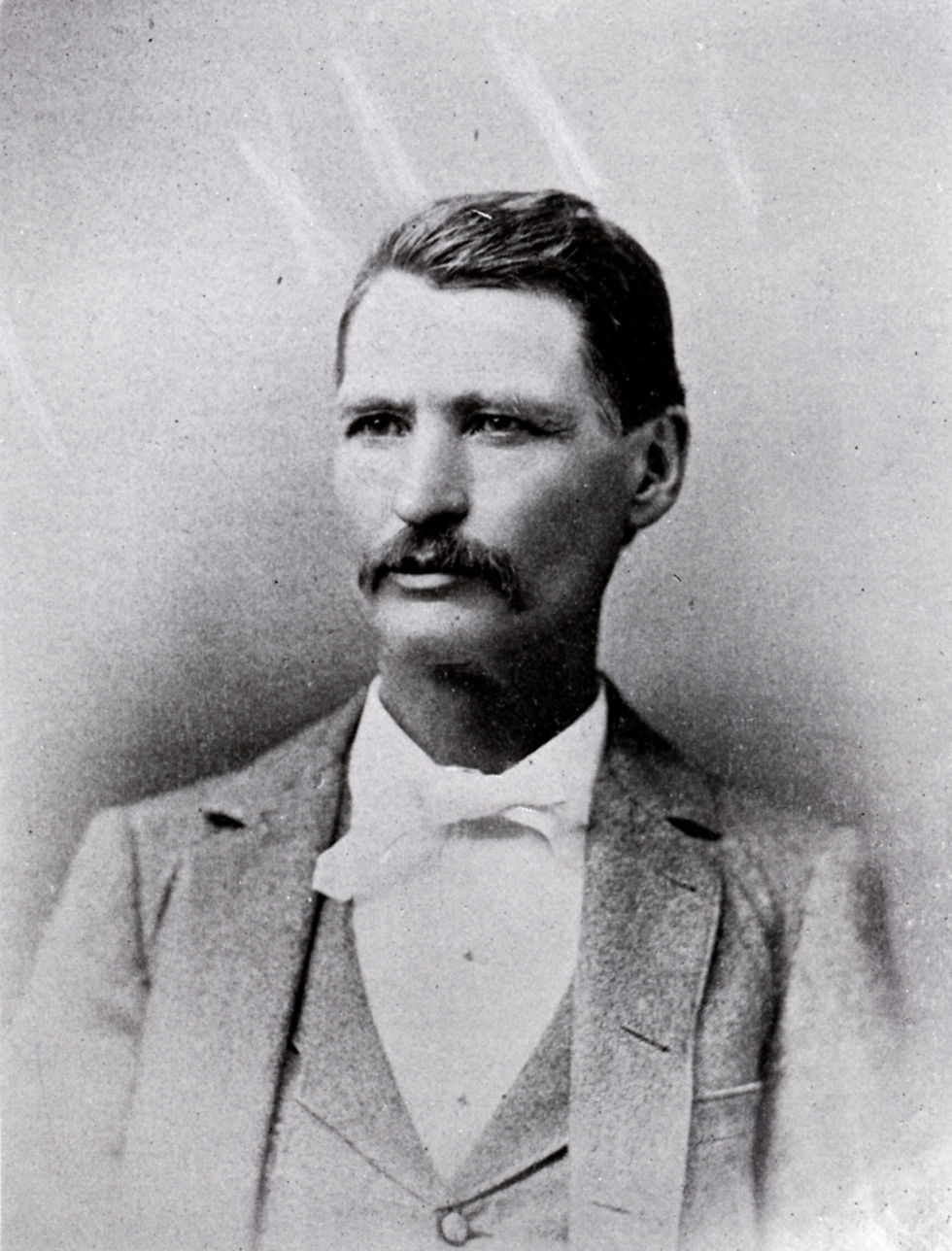
1867: The Springfield Leader was founded by O. H. Fahnestock and printed out of an office on St. Louis Street. After two years, D. C. Kennedy, an Irish immigrant who had formerly worked on the Patriot, became the owner of the Leader.
1868: A.F. Ingram established the Weekly Gazette, another Republican paper. In less than a year, the Gazette was purchased and incorporated into the Patriot.
1870: The Springfield Times was founded by George M. Sawyer and C. H. Lamoreaux. The Times was printed on South Street.
1870: The Springfield Republican was founded by Colonel James Dumars.
1870: The Springfield Leader briefly became the Springfield Daily Leader, publishing a new issue every day except for Sunday and costing 20 cents a week (roughly $5 today). In less than a year, the Leader became a weekly paper once again.
Consolidation Begins
1878: The offices of the Leader were destroyed in a fire. The paper survived through a special arrangement with the proprietors of a rival paper, the Patriot-Advertiser, who allowed the Leader to be printed in their shops.
1879: The first issue of the Republican-aligned Daily Extra was published. Colonel J. P. Tracey and Dr. C. S. McClain would later purchase it.
1880: D. C. Kennedy, publisher of the Leader, purchased the Springfield Times. Kennedy then merged the Times with the Leader, briefly running the paper as the Times-Leader until changing the title back to the Leader in 1882.
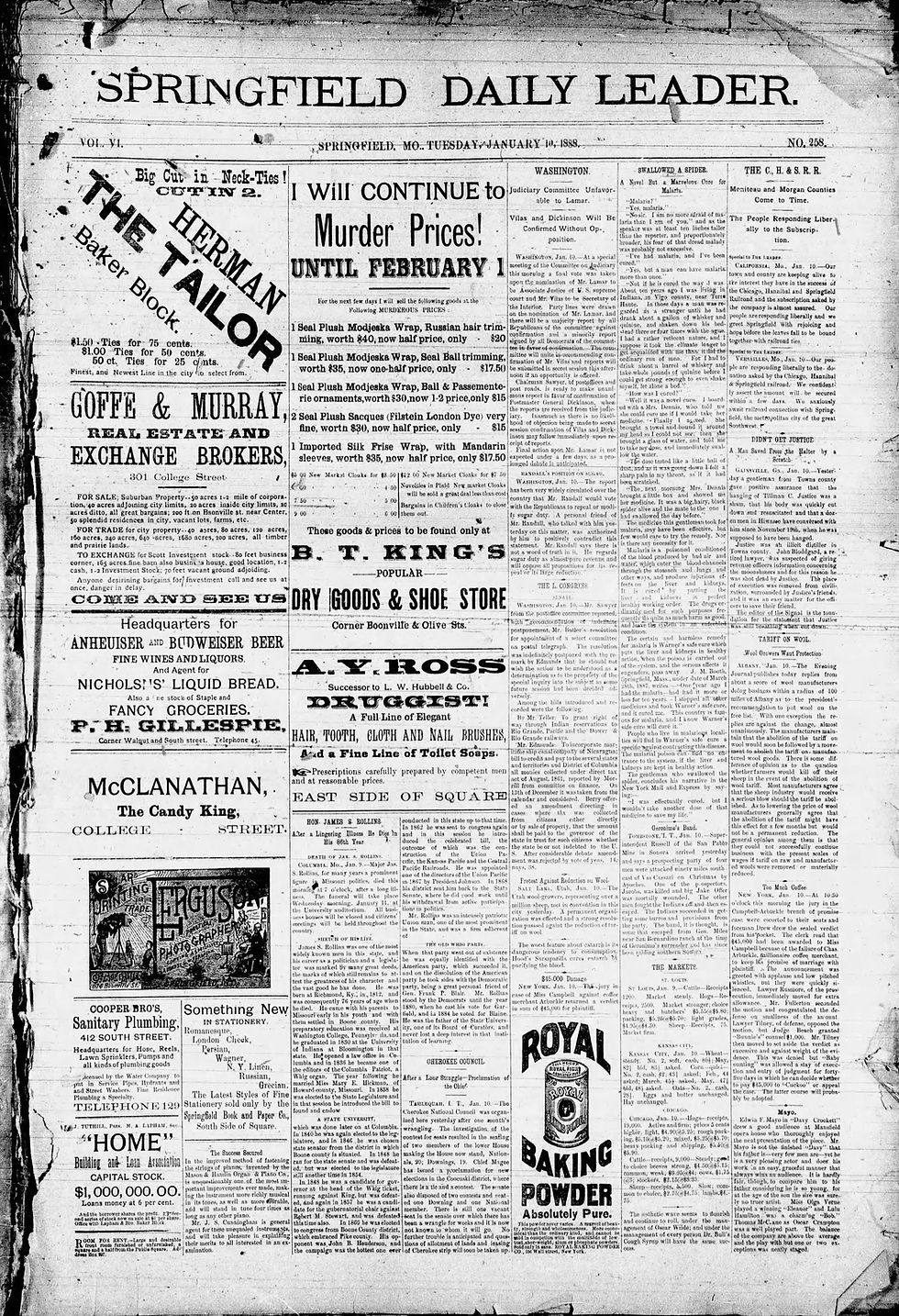
1881: J. G. Newbill began publication of the Springfield Express.
1882: The Daily Extra was sold to and absorbed by the Springfield Journal.
1883: The Leader successfully transitioned to daily publication, becoming the Springfield Daily Leader.
1885: Colonel J. P. Tracey and Doctor C. S. McClain founded the Sunday Reflex.
1890: The Sunday Reflex absorbed the Springfield Journal. Soon after, the Reflex was purchased by the Republican.
1890: The Springfield Democrat was founded by John O'Day.
1891: The Springfield Democrat absorbed the Republican.
1892: D. C. Kennedy retired from the Daily Leader to work on Grover Cleveland's 1892 presidential campaign. The Leader Publishing Company was established to take ownership of the paper under the leadership of J. F. Mitchim and with the financial backing of John O'Day.
1892: The Daily Republican, which was unrelated to the earlier Springfield Republican, began publication.
Jewell and the Bixby Brothers
1895: H. S. Jewell purchased the Daily Leader and its rival, the Democrat, merging the two. The paper briefly ran as the Leader-Democrat, then the Leader and Democrat, until it became the Springfield Leader once again in 1905.
1900: H. S. Jewell founded a Sunday paper, the Springfield Morning Leader. Between his two papers, Jewell became the first newspaper publisher in Springfield to make a steady profit.
1906: The Daily Republican was purchased by E. E. E. "Triple E" McJimsey.
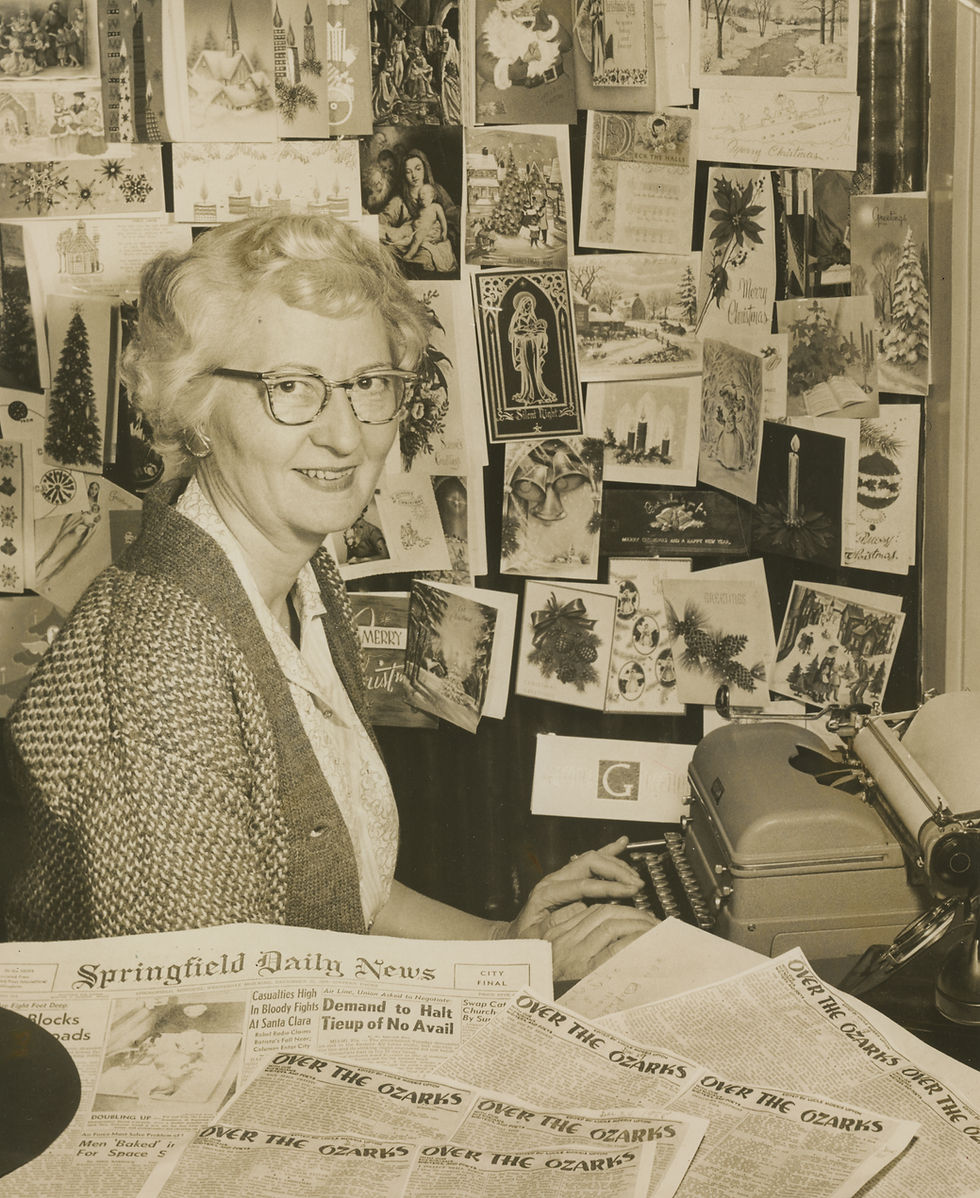
1926: Lucile Morris Upton began working for the Springfield Leader.
Upton was a reporter for the Denver Express and El Paso Times before arriving in Springfield, where she worked the Greene County Courthouse beat. She resigned in 1936 due to rules prohibiting married women from working for the paper. When her husband died in 1947, Upton returned as the editor behind the "Ozarks Wastebasket" (later "Over the Ozarks") column, which covered the history and culture of the region.
View photographs and documents from Upton and her extended family in the Lucile Morris Upton Collection.
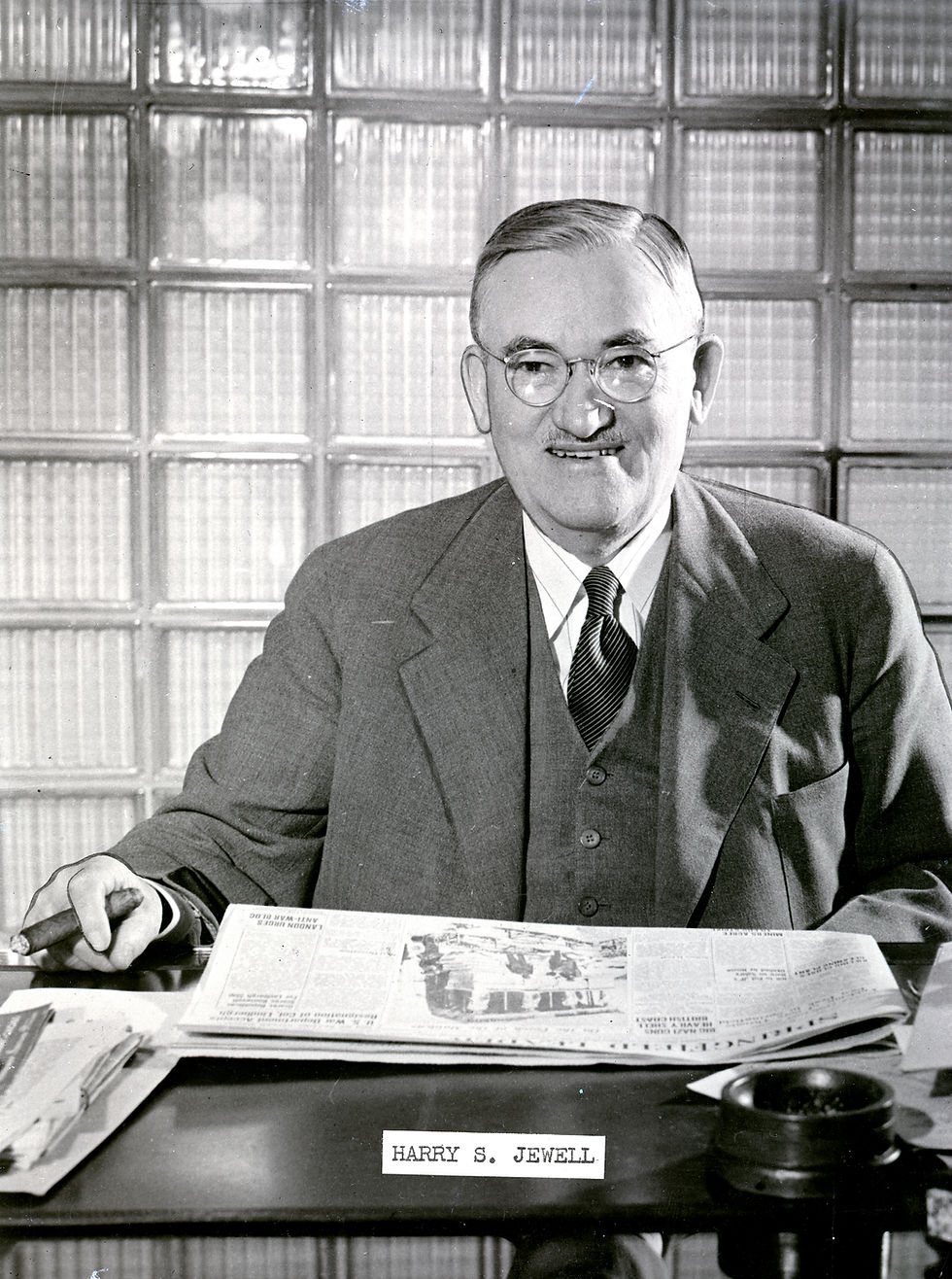
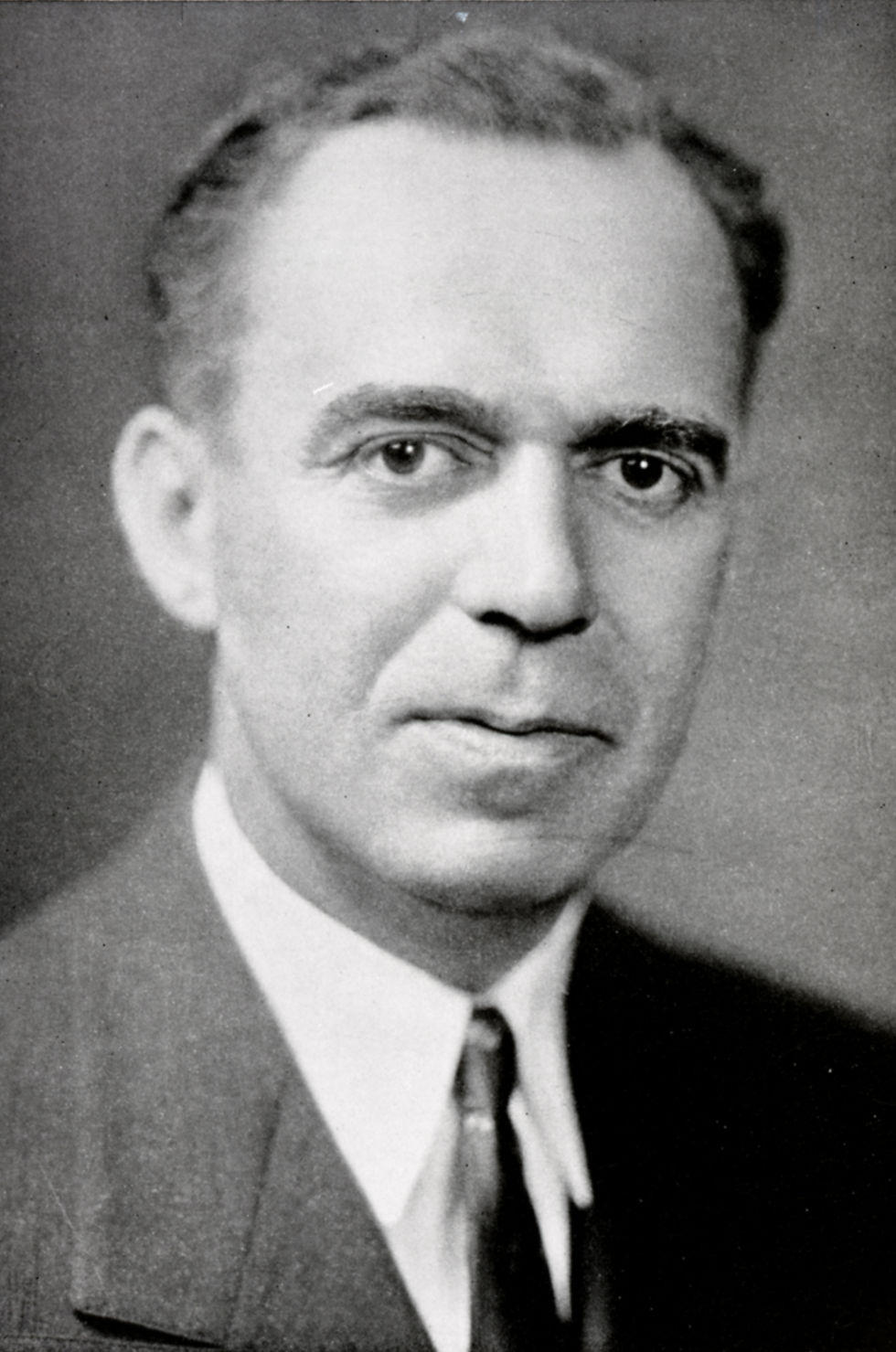
1927: "Triple E" McJimsey offered to sell the Daily Republican to H. S. Jewell. Jewell declined, fearing backlash from local businesspeople who did not wish to see a newspaper monopoly. The Republican was instead purchased by Edson and Joel Bixby, who had previously worked as publishers in Muskogee, Oklahoma. Edson became editor-in-chief, and the brothers hired George Olds as managing editor. Two days after the Bixbys' purchase, the Republican was renamed the Springfield Daily News.
1927: H. S. Jewell sold the Leader to Stuart Olivier, a publisher from Baltimore, for $750,000 (equivalent to over $13 million in 2025).
1928: Stuart Olivier sold the Leader to the Bixby brothers, who consolidated the Leader with the Daily News.
1929: By this point, the Springfield Express was renamed the Daily Events. This general information publication details legal proceedings, real estate transactions, commercial activity, and more in Greene and Christian Counties. As a direct continuation of the Express, the Daily Events is the longest-running publication in Springfield.
1929: Dismayed at the Bixby brothers' newspaper monopoly, local business owners promised to purchase three years of advertisements from H. S. Jewell if he would begin printing a new paper. Jewell was convinced, and the new Springfield Press was printed out of offices on Jefferson Avenue, between St. Louis Street and McDaniel Street.
1933: The Bixby brothers moved operations to a one-story building on Boonville Avenue, between Chestnut Expressway and Tampa Street.
Springfield Newspapers, Inc.
1933: In the midst of the Great Depression, H. S. Jewell and the Bixby brothers found that Springfield's economy could not support two rival newspaper companies. A merger was enacted, resulting in Springfield Newspapers, Inc. H. S. Jewell took the helm as president, with Edson Bixby serving as vice president, editor, and general manager. The company operated out of the Bixby brothers' Boonville plant and published three papers: the Daily News in the morning, the Leader and Press in the evening, and the News and Leader on Sundays.
1940: Edson Bixby died, leaving George Olds as editor-in-chief of all three of Springfield Newspapers, Inc.'s publications.
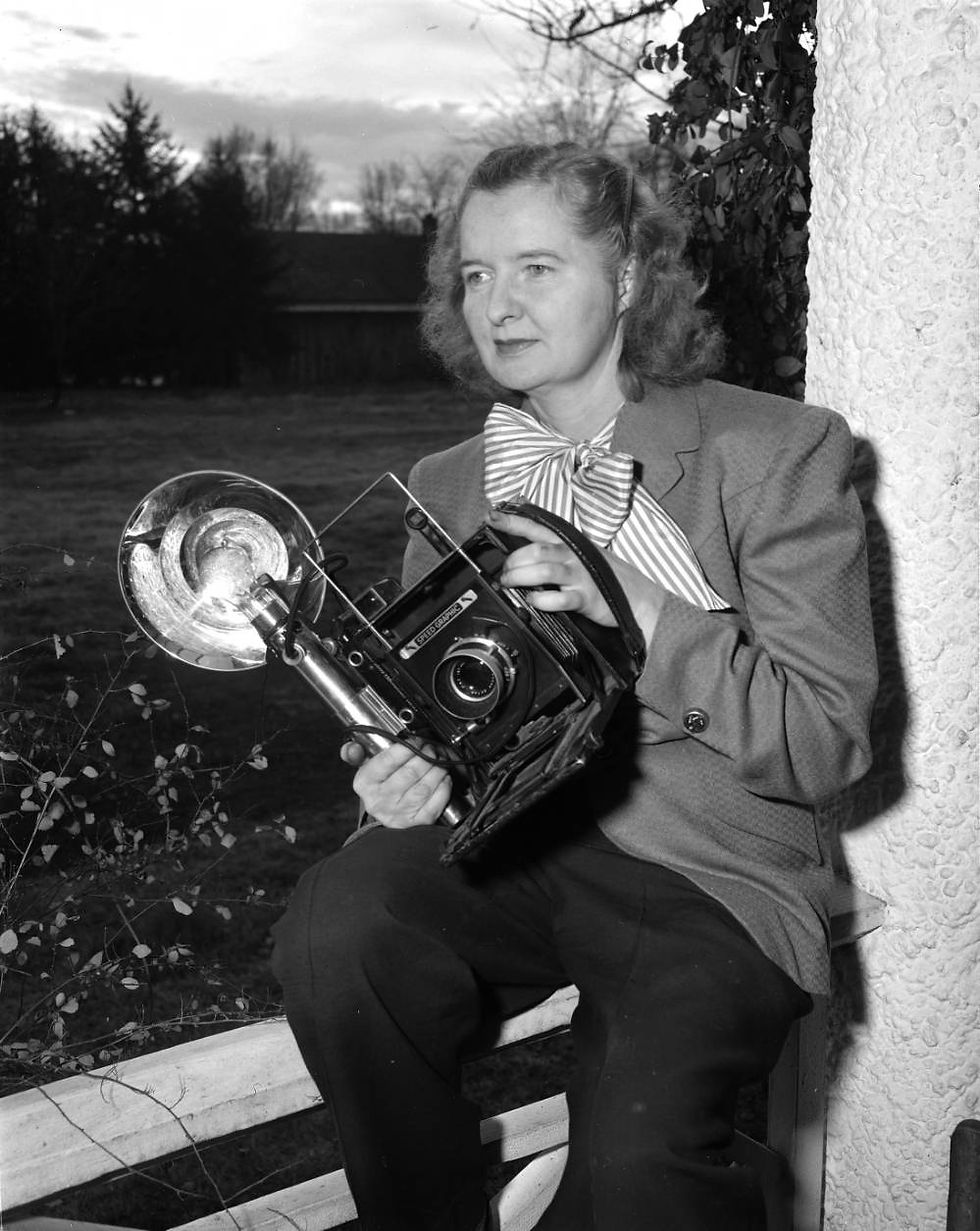
1942: Betty Love began working for Springfield Newspapers, Inc.
Initially employed by the newspaper as a cartoonist, Love was tapped to replace photographer John Reading McGuire when he was drafted in 1945. Love is now remembered as one of Springfield's finest newspaper photographers. After teaching herself to shoot and develop photos, Love became a pioneer among women press photographers and in the use of color photography in daily newspapers, as well as the winner of several photography awards.
Learn more about Love's life and career in Local History Associate Konrad Stump's article "From Drawing Board to Darkroom," and view over 4,000 of her photographs in the From the Darkroom Collection.
1945: H. S. Jewell died after 50 years of working in the Springfield newspaper scene. His son-in-law, Thomas Warren Duvall, became president and publisher of Springfield Newspapers, Inc.
1947: A fire destroyed Springfield Newspapers, Inc.'s plant and equipment. An afternoon edition was nevertheless published later that day with the help of local print shops. The next day, a combined paper titled the News-Leader and Press was printed in Muskogee, Oklahoma and sent to Springfield for circulation. Springfield Newspapers, Inc. relocated its printing operations to Tulsa while a new plant was built in Springfield.
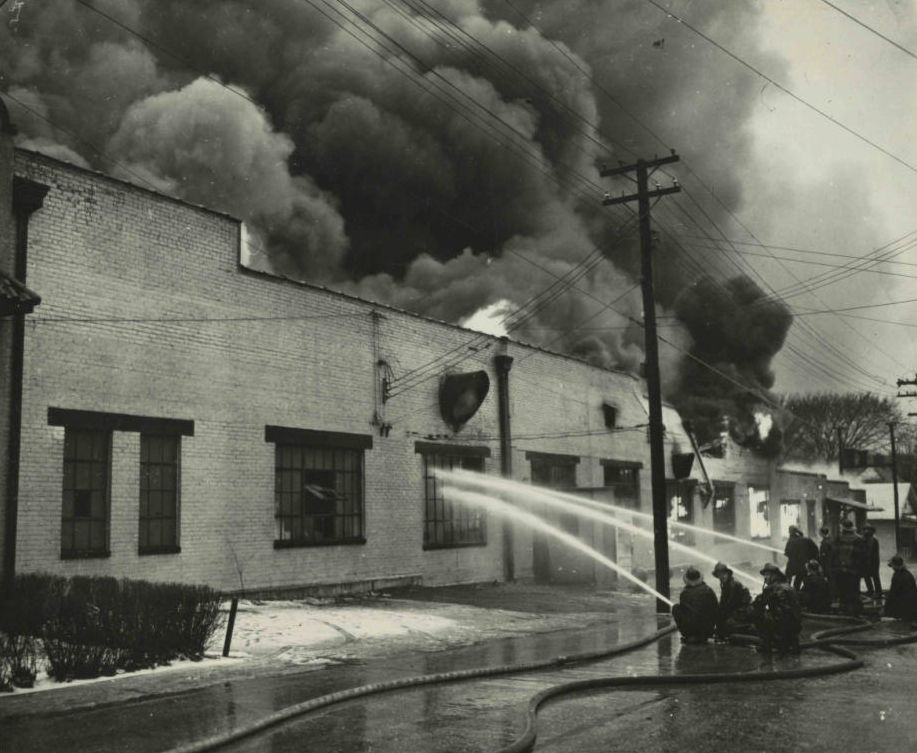
1948: Springfield Newspapers, Inc. returned home as construction was completed on a new plant, built on the same location on Boonville Avenue as the former plant.
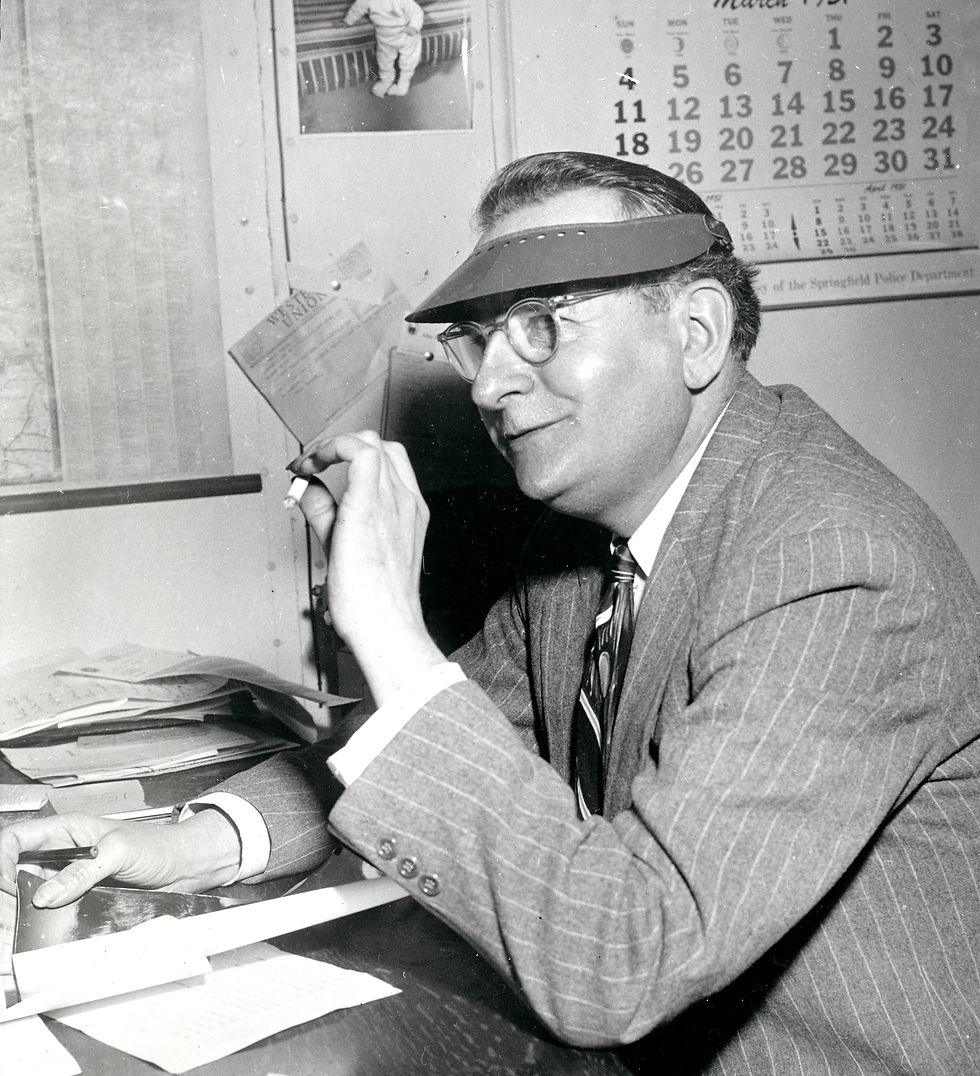
1949: George Olds lost his job as editor after publishing that reporters Carl Fox and Dave Hargis of KGBX, a radio station owned by Springfield Newspapers, Inc., had only contributed 5 cents each to a local Red Cross Drive. Olds went on to found Bias, a weekly publication that ran for five years. Olds died in 1956.
1949: The International Typographical Union Local 158 went on strike. Springfield Newspapers, Inc. hired non-union printers to fill their roles. In the following months, the company reported that bombs had been detonated outside of and within their offices, as well as in a motel where non-union printers were living. No arrests were made concerning these incidents.
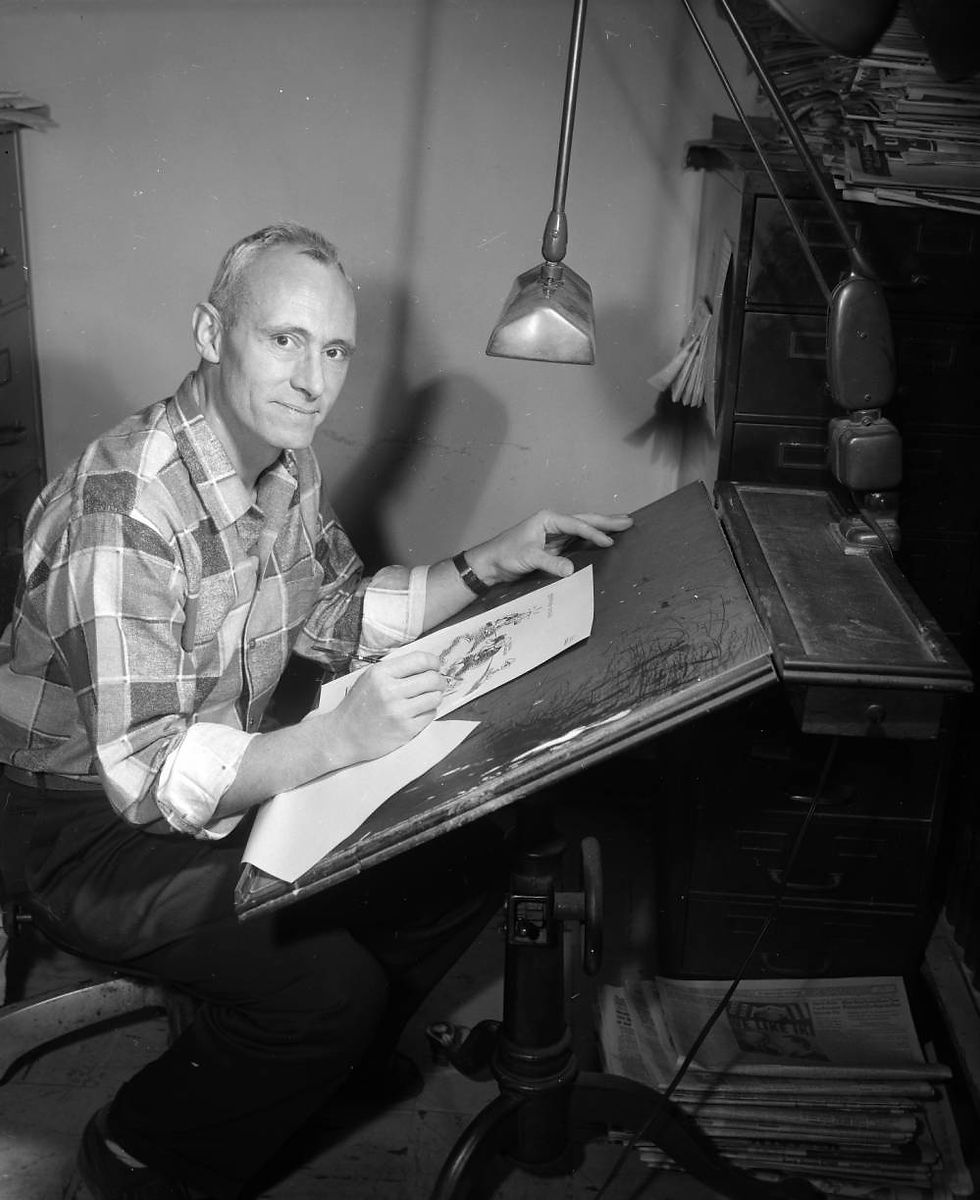
1953: Bob Palmer began working as a cartoonist for Springfield Newspapers, Inc.
Originally from New York, Palmer served in the Second World War with the American Field Service in North Africa and later with the United States Army in Europe, where he participated in the D-Day landings. After the war, Palmer began his career as an artist, drawing comic books and editorial cartoons in various newspapers before he arrived in Springfield. Palmer's work earned him numerous awards, including three Freedom Foundation Awards and a Pulitzer Prize nomination.
View a selection of Palmer's work in the Bob Palmer Collection.
1954: The International Typographical Union Local 158 strike was called off after having become one of the longest newspaper strikes in American history. None of the ITU members who struck returned to work for Springfield Newspapers, Inc.
1961: President and publisher Thomas Warren Duvall died in a traffic accident. He was succeeded by his son-in-law, Arch Watson.
1963: Lucile Morris Upton retired but remained an active member of the community. Upton continued to write and was named by the Greene County Court as the official county historian. She also served in local historical societies and on the Springfield City Council. Upton died in 1992.
1970: Bob Linder began working as a photographer for Springfield Newspapers, Inc.
Over the course of four decades, Linder served as staff photographer, chief photographer, photo editor, and multimedia specialist, ushering in progress as he facilitated the transition to color photography in the 1970s and 1980s, and digital photography in the 1990s. Linder has received awards from numerous journalism and photography organizations and was inducted into the Missouri Photojournalism Hall of Fame in 2012.
View a selection of Linder's work in the Bob Linder Collection.

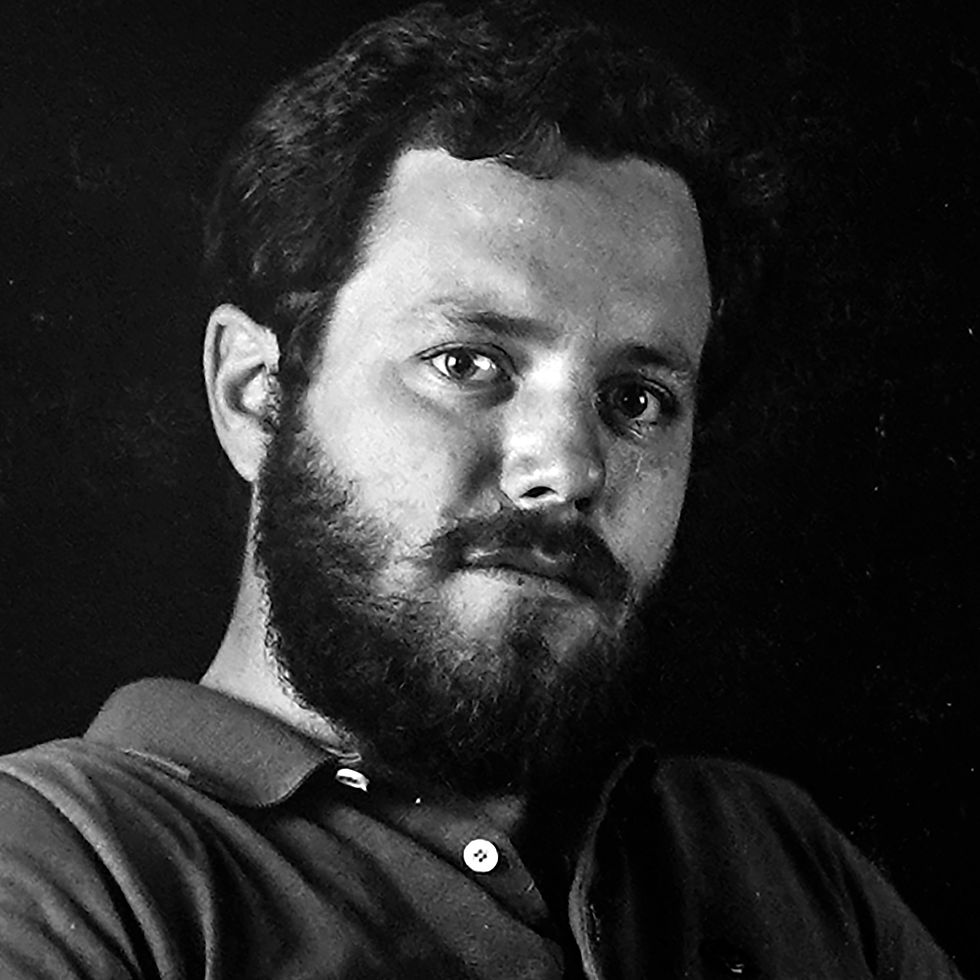
1973: Tim Mullikin began working as a photographer for Springfield Newspapers, Inc.
A Springfield native, Mullikin was hired as a part-time staff photographer through his friend and mentor Art Evans. During his time with the paper, Mullikin covered a variety of subjects, including sports, politics, and everyday life in the Ozarks, earning several awards from the Missouri-Kansas Associated Press annual contests in the process. The majority of Mullikin's original negatives were destroyed in a fire in 1979, the same year he left the newspaper.
View a selection of Mullikin's work in the From the Darkroom Collection.
1975: Managing editor Dale Freeman merged the Daily News and Leader and Press Saturday editions into one new Saturday paper: the Springfield News & Leader.
1975: Betty Love retired after nearly 35 years with Springfield Newspapers, Inc. She passed away in 1984.
The Gannett Era
1977: Springfield Newspapers, Inc. was sold to Gannett Co., Inc., a national mass media holding company. In 2025, Gannet was renamed to USA Today Co.
1980: The Springfield Business Journal was founded by Dianne Elizabeth Osis. The Springfield Business Journal has the distinction of being the oldest business journal in the state of Missouri.
1981: Jim Mayfield began working as a photojournalist for Springfield Newspapers, Inc.
Born in Springfield, Mayfield studied photography at the Art Center College of Design in Los Angeles before returning to the Ozarks. He initially covered breaking news before transitioning to the features department, where his work emphasized natural light and emotional storytelling. His assignments included the popular "Ozarks Byways" series, which documented everyday life in small towns across the region.
Learn more about Jim Mayfield's life and career in former Local History Associate Claire Porter's article "Behind the Lens: Jim Mayfield," and view a selection of his work in the Jim Mayfield Collection.

1987: The Daily News and Leader and Press were combined into one seven-day daily newspaper: the Springfield News-Leader.
1991: Bob Palmer retired at age 70 as Springfield's longest-running and last local cartoonist. Palmer passed away in 1999.
1992: The Springfield Times (not to be confused with the Springfield Times published by Sawyer and Lamoreaux in the 1870s) began publication with former KSPR sportscaster Tom Mast serving as its editor. The publication amassed 1,300 subscribers and ran for ten months before shutting down due to unsustainable costs.
1995: The Daily Events is purchased by Jeff Schrag.
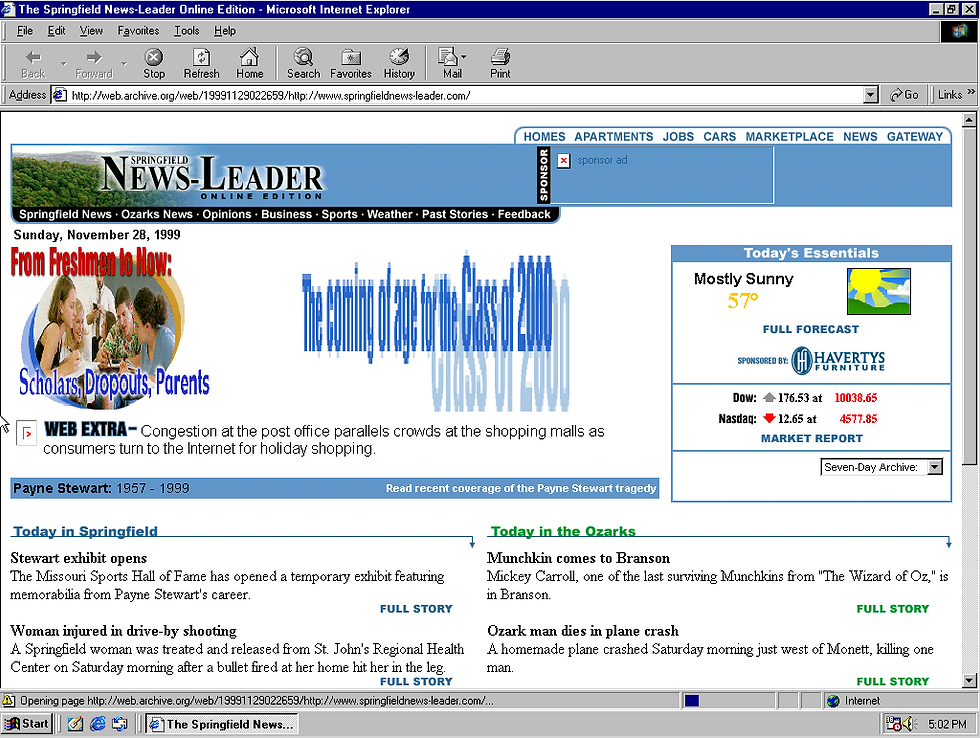
1999: The News-Leader launched its website, springfieldnews-leader.com (now just news-leader.com). The website was slated to launch November 1, but staff elected to bring the paper online a week early to report on the death of Springfield-born professional golfer Payne Stewart in an aviation accident.
2010: Springfield Newspapers, Inc. was renamed News-Leader Media Group to better reflect the array of digital and print products it now offers.
2011: Dianne Elizabeth Osis retired from the Springfield Business Journal. Her daughter, Jennifer Jackson, took over as publisher and owner.
2016: In the interest of preserving the history and culture of Springfield and the Ozarks, the News-Leader Media Group and the Springfield-Greene County Library District entered into a partnership for an ongoing photo digitization project. Through this partnership, the Library's Local History & Genealogy Department digitized thousands of negatives from the News-Leader which have been made available online in the From the Darkroom Collection.
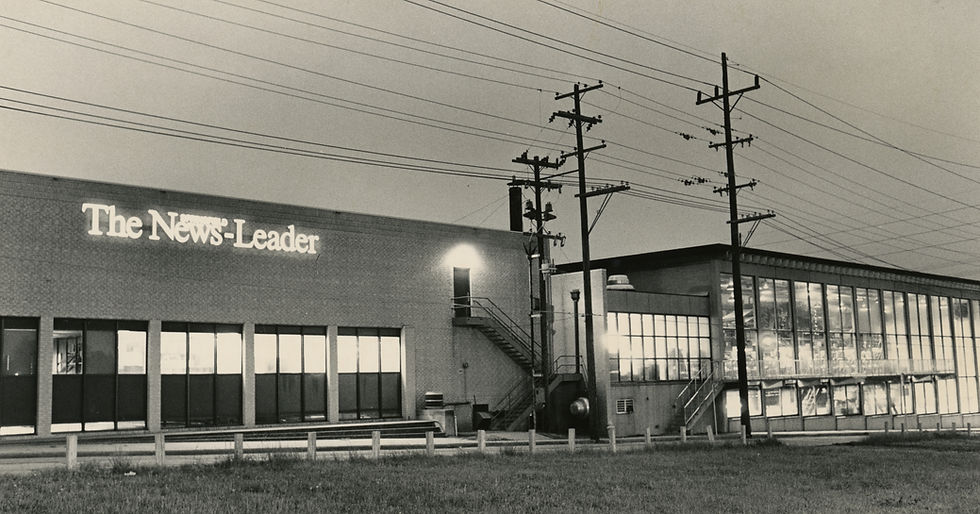
2017: The News-Leader celebrated its 150th anniversary, tracing its origins to the founding of the Springfield Leader in 1867.
2021: Following the consolidation of print production to a facility in Columbia, Missouri, the News-Leader moved from its longtime Boonville location to offices in Hammons Tower.
2022: The Springfield Daily Citizen began publication. Created by former Springfield mayor Tom Carlson, the Daily Citizen is a nonprofit, independent, digital-only news outlet that emphasizes nonpartisan reporting, in-depth coverage of local issues, and citizen engagement.
2022: The entirety of the News-Leader's photographic print and negative collection was gifted to the Springfield-Greene County Library District. The Library's Local History archive is now home to millions of images originating from the News-Leader and its predecessors. Local History staff have digitized tens of thousands of these images in order to make the photographic history of Springfield and the Ozarks accessible to the public. Indexes are available for images that have not been digitized.
2025: Print production for the News-Leader was relocated to its current location in Des Moines, Iowa.
2025: The Daily Events was sold to the Springfield Business Journal after its owner, Jeff Schrag, was elected mayor of Springfield.
2026: Marty Goodnight became owner of the Springfield Business Journal. A former associate editor for the Business Journal, Goodnight had previously taken the helm as publisher in 2024.
If you enjoyed this article, please consider making a donation to the Preserving Ozarks History Endowment. Each contribution supports Local History & Genealogy's mission of preserving the history and culture of the Ozarks.
Want more local history news and stories delivered directly to your inbox? Sign up for Local History & Genealogy's newsletter and email announcements.
For Further Reading
"$750 Top Gift, 5 Cent Smallest." Springfield Leader and Press, 16 Mar. 1949, p. 15.
Conard, Howard L., editor. "Springfield." Encyclopedia of the History of Missouri, vol. 6, The Southern History Company, 1901.
Glazier, Bob. "Saga of Two Nickels." Springfield! Magazine, vol. 16, no. 1, June 1994, p. 10.
Kelly, Susan Croce. Newspaper Woman of the Ozarks: The Life and Times of Lucile Morris Upton. University of Arkansas Press, 2023.
"The Local Press." The Leader-Democrat, Annual Souvenir Edition of the Leader-Democrat, 31 Oct. 1895, p. 7.
McConnell, Kaitlyn. "The Last Run for the Legendary Press." Ozarks Alive!, 30 Mar. 2020.
Newbill, John G. "The Newspapers of the County." Past and Present of Greene County, Missouri, by Jonathan Fairbanks and Clyde Edwin Tuck, A. W. Bowen & Company, 1915.
"The Olden Time." Springfield Patriot-Advertiser, 10 Jan. 1878, p. 1.
Porter, Claire. "Behind the Lens: Jim Mayfield." Springfield-Greene County Library Local History & Genealogy Blog, 27 Nov. 2024.
Shepard, Edward M. "Ninety Years of Newspaper Work in Springfield." The Springfield Press, 4 Mar. 1930, p. 8.
"Springfield Newspapers: 150 Years of History." The Springfield News-Leader, 7 Jan. 2017, p. J2.
Stump, Konrad. "From Drawing Board to Darkroom: The Journey of Betty Love." Springfield-Greene County Library Local History & Genealogy Blog, 21 Aug. 2025.
Upton, Lucile Morris. "'Fire or Funeral, The Leader Emerged Triumphant.'" Springfield Leader and Press, 4 Apr. 1967, pp. 14, 24.