
From Drawing Board to Darkroom: The Journey of Betty Love
Updated: Apr 25
Betty Love’s photographs of fires, car accidents, politicians, brides-to-be, and school children graced the pages of Springfield newspapers for nearly 35 years. Her work earned her a place in the who’s who among newspaper journalists as a woman working in the field when few others held similar positions and later as a pioneer of color photography in newspapers.
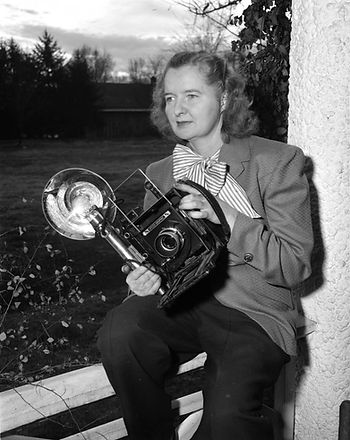
Love was the daughter of Dr. Joseph W. Love, an officer in the U.S. Army Medical Corps, and Susannah Crenshaw Love. Both the Love and Crenshaw families were early settlers in Greene and Webster Counties. She attended public schools in Springfield and graduated from Drury College in 1931.
After spending one year teaching in San Antonio, Texas, Love returned to Springfield to teach art for nine years, first at McGregor Elementary and then at Jarrett Junior High School.
Hank Billings, with whom Love later worked at Springfield Newspapers Inc., was a student at Jarrett while Love was teaching art classes. He recalled hearing Love’s booming voice and recognizable laugh, even when he was in a different part of the school.
While she was teaching at Jarrett in the summer of 1942, Love was asked to take a temporary position as cartoonist for Springfield Newspapers, Inc. At the time, it was practically unheard of for a woman to work as an editorial cartoonist. The prevailing societal belief was that women should not express political views. However, with much of the male workforce dwindling due to World War II, the roles of U.S. women changed.
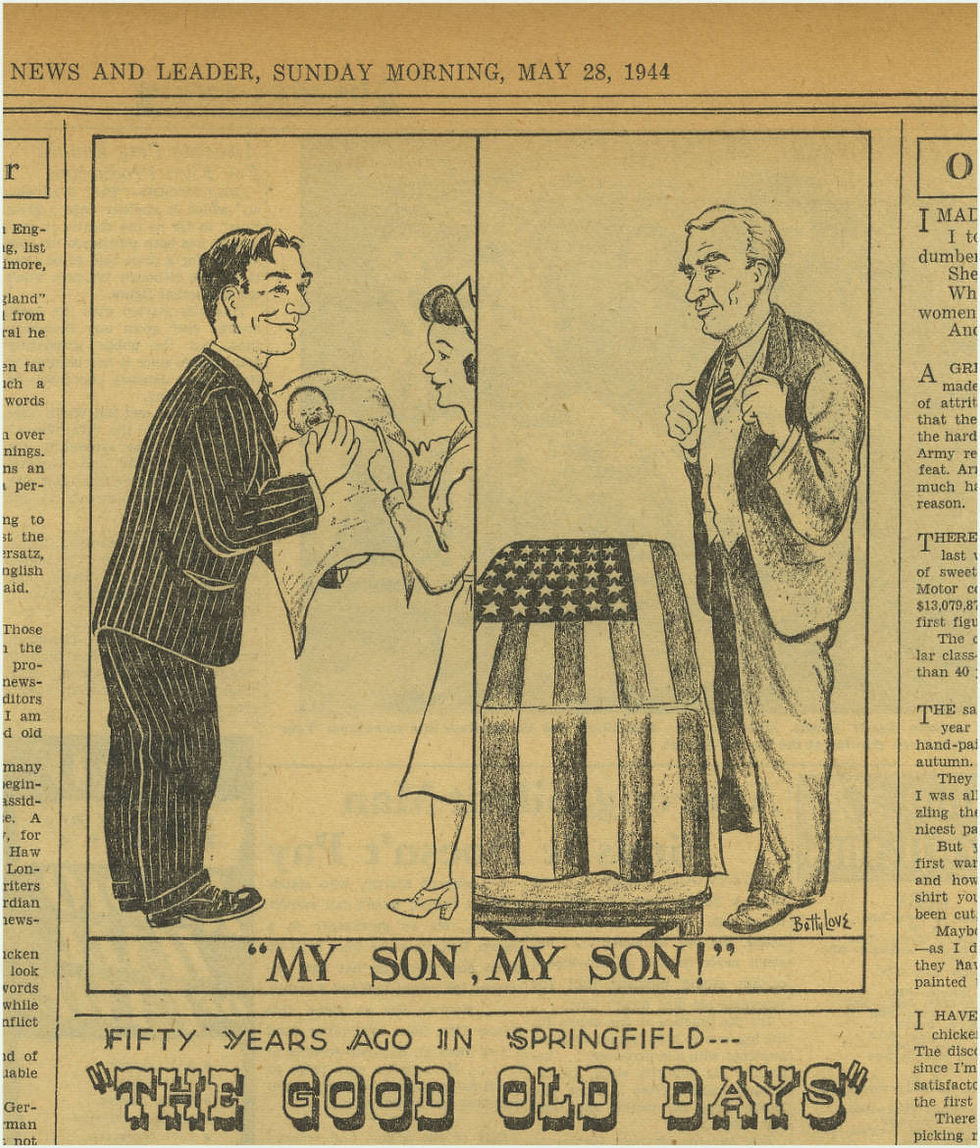
Love’s cartoons put the viewer directly in the face of her subjects. Many of the cartoons feature solitary figures focused in on, and occasionally looking out from, the drawing. The effect could be discomforting, cutting at the heart of Love’s commentary, but it could also create a feeling of empathy.
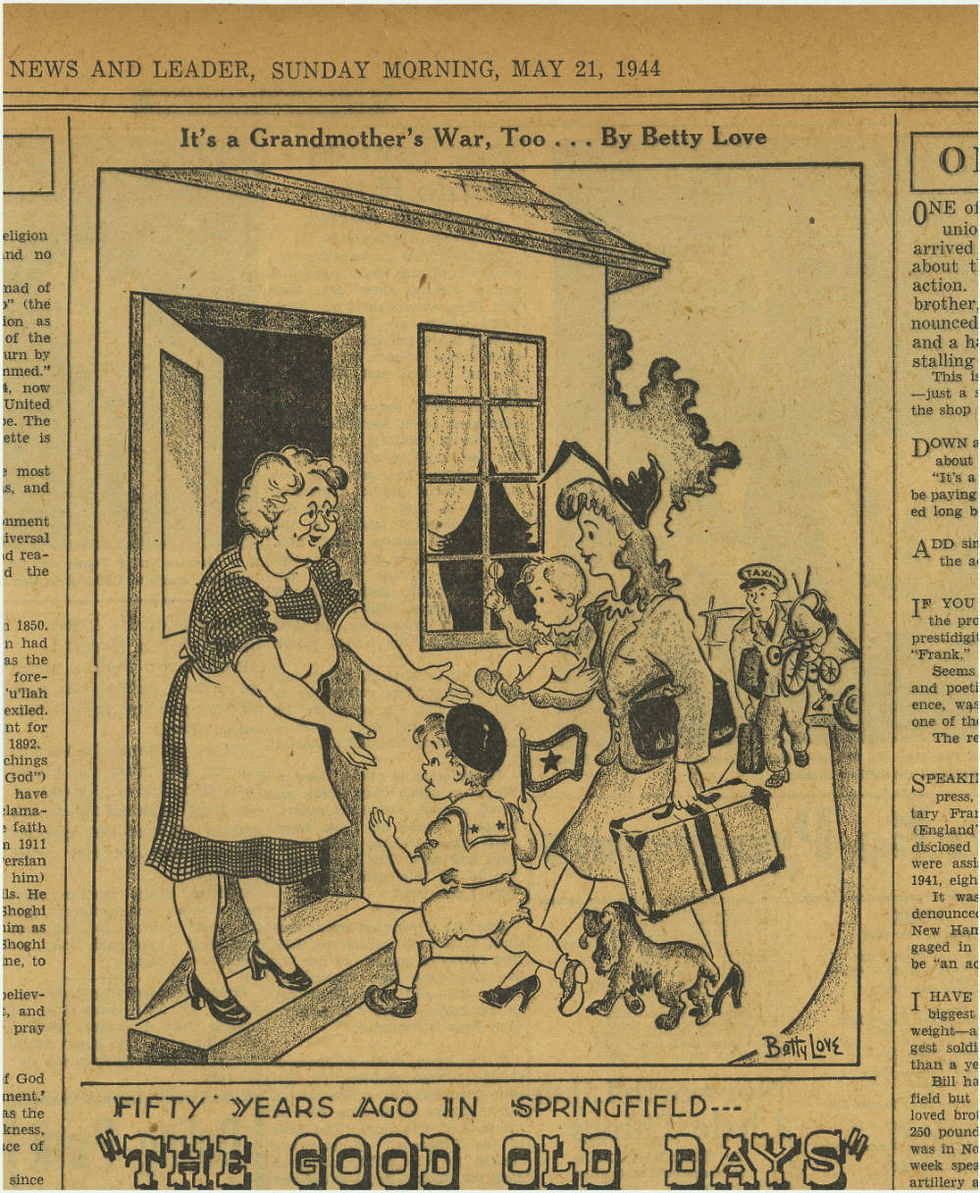
As one of the few women in the field of editorial cartooning, Love brought a unique perspective to the art. She depicted the effect of war on families — grandmothers left to care for their deceased son’s family, mothers carrying the burdens of home and children alone, and children facing the reality of war by taking on adult responsibilities.
Love might have had a long career as an editorial cartoonist if John Reading McGuire, the newspaper’s photographer, had not been drafted in early 1945. According to then-reporter Robert Glazier, editor George Olds handed Maguire’s big Speed Graphic camera to Love and said, “You’re now our photographer.”
Reflecting on the event years later, Love commented: “You just don’t tell Olds ‘No,’ so here I am… a photographer.” During her transition, Love continued to cartoon alongside her replacement, Wills Scott “Shad” Shadburne. Love created the regular Sunday panel while Shadburne handled the rest of the art. Her last known Sunday panel appeared on August 26, 1945.
Glazier was the reporter accompanying Love on both her first and last assignments as a photographer. He reminisced about the days when he and Love began working together. Back then, the reporter always carried the photographer’s “gadget bag,” which would contain items like film holders and flash bulbs. This would free up the photographer's hands to get the shots they needed.
Love taught herself darkroom techniques and how to tell stories through photography. One of her early assignments was accompanying journalist Hank Billings for a story about the old Sears store, for which Olds wanted an aerial photograph. Love was initially nervous, closing her eyes while taking the aerial shots. According to Billings, Love soon conquered her fears and became comfortable leaning out of the plane to capture her photograph. Eventually she was telling Billings how to fly the plane so she could get the best angle, and she even occasionally flew the plane between shots.
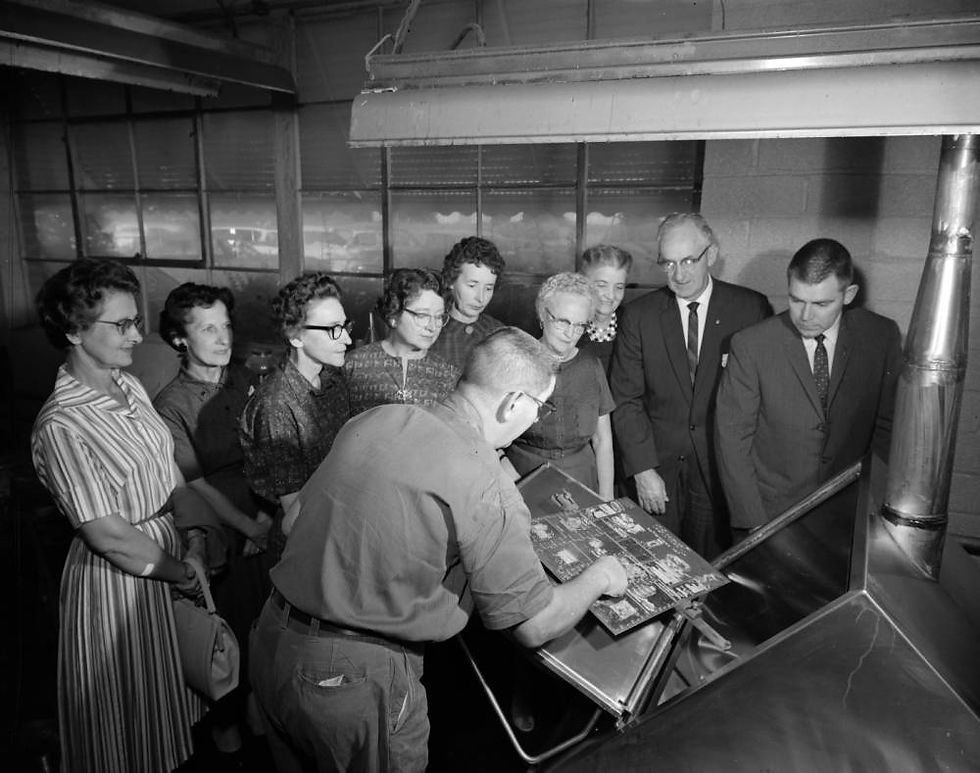
Love faced one of the most devastating moments of her photojournalism career just a few years after it began. On March 27, 1947, the Springfield Newspapers Inc. building caught fire. Most of Love’s negatives and prints, along with prints from previous photographers, were destroyed. Lester Forester, who worked as an engraver at the time, recalled showing up to an office that editor George Olds had established downtown. Olds presented him with eight photographs Love took of the fire. Olds wanted the photographs engraved in time to go to press that day, even though the building, according to Forester, was still in smoking ruins. He took the photographs to Aurora to have them pressed, and he arrived back in Springfield in time for them to be printed in the evening edition of the Springfield Leader & Press.
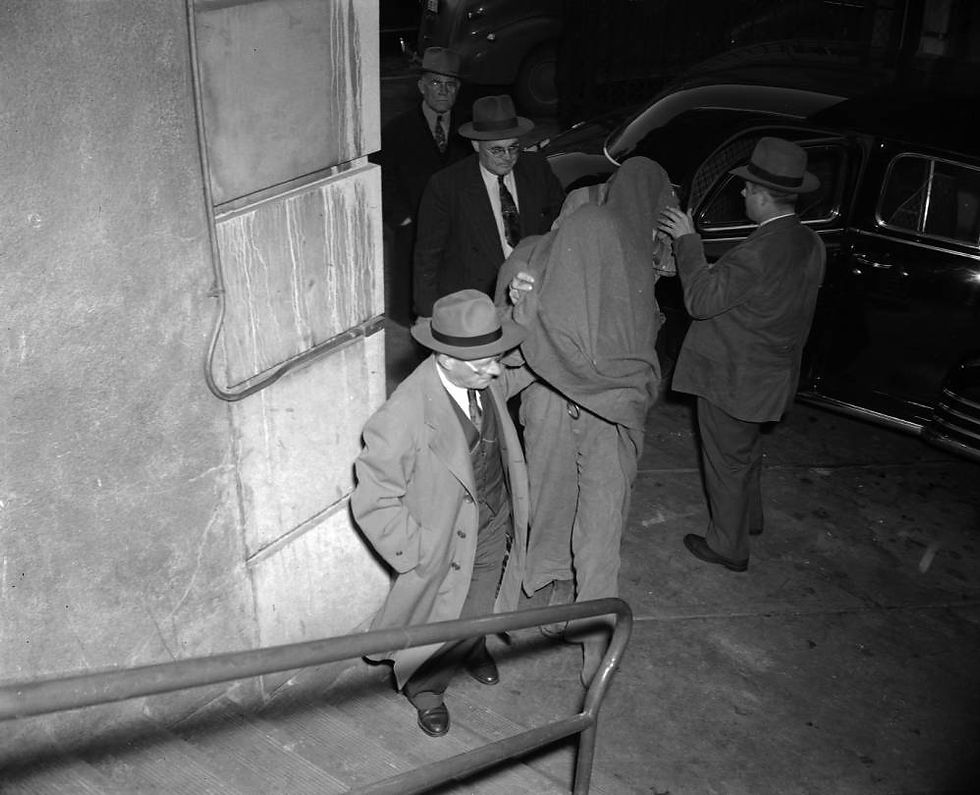
On November 28 that same year, Love photographed the story that brought her the most national attention. A free speech controversy erupted over news coverage of two bank robbery suspects as they were transported to Springfield’s Federal Building. Love was attempting to photograph the suspects, Louis Alfred “Duke” Petty and James Robinson, whose identities were concealed by a blanket. U.S. Marshal Fred “Bull” Canfil ordered Love not to photograph the then-unnamed suspects, but Love and local reporter Joe Cody informed Canfil that concealing the suspects’ identities violated the First Amendment. Canfil allegedly shouted, “The Constitution be damned,” in response.
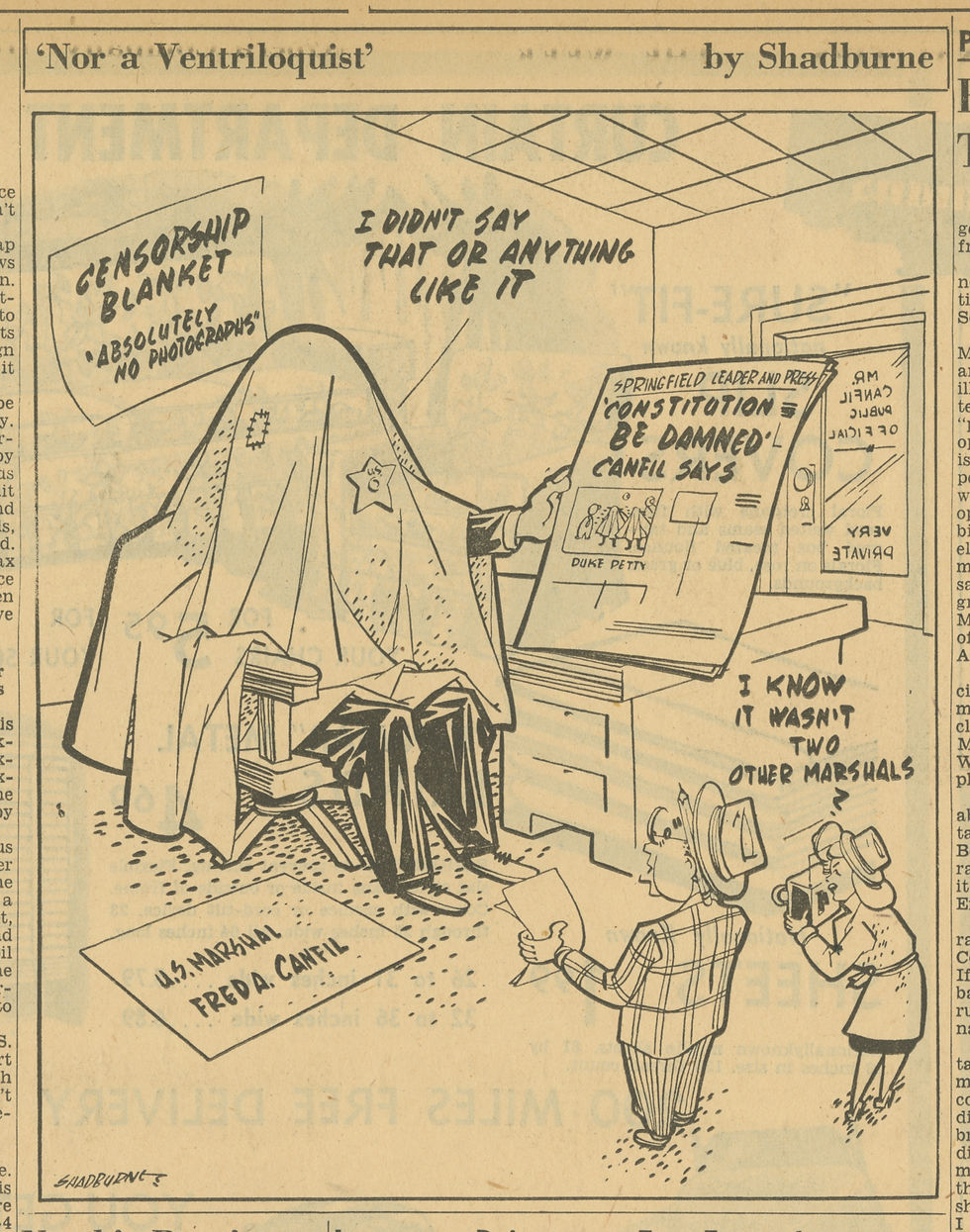
Canfil was a World War I buddy of President Harry S. Truman, and Canfil’s quote, as well as commentary on his cozy connection to Truman, made national headlines. The incident resulted in bad blood between Truman and Love, with Truman refusing to let Love take his picture whenever he was in the area. It was only when artist Thomas Hart Benton, who was friends with both, arranged a handshake between the two years later that the rift was mended.
Love was a rarity for the middle decades of the 20th century as one of the first women press photographers and as a charter member of the National Press Photographers Association. Despite her unusual beginnings, Love was awarded numerous photography awards and became a pioneer of color photography in daily newspapers.
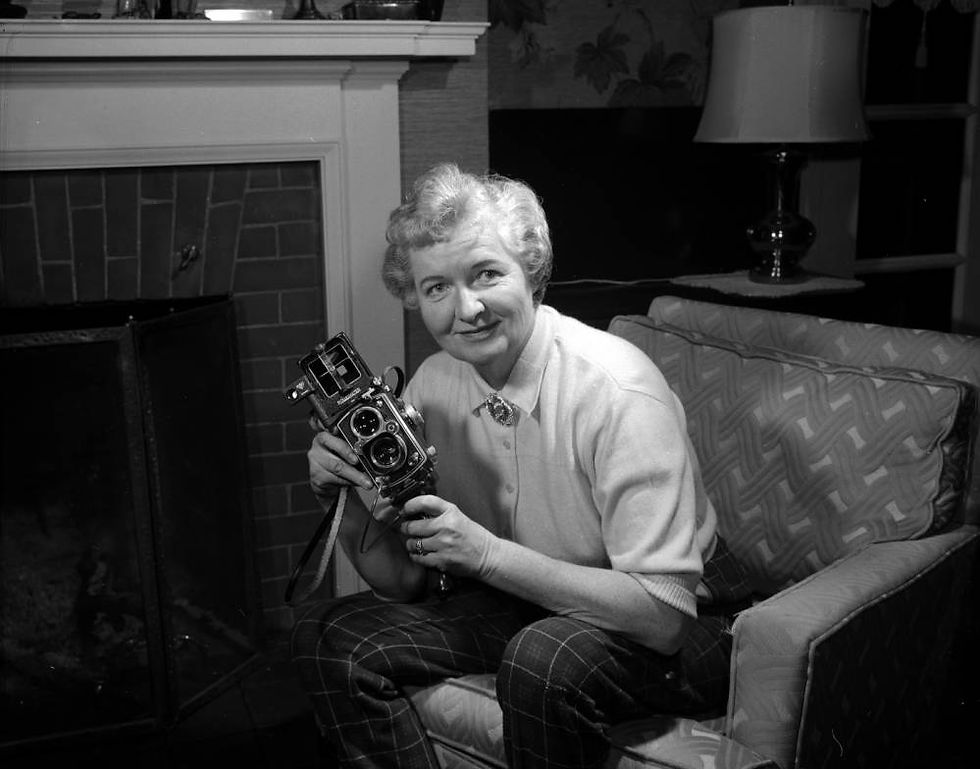
Although Love retired in 1975, her legacy in the field of cartooning and photography has been preserved and shared, most comprehensively through the Library’s digital archives. Dozens of Love’s cartoons have been digitized and made accessible through Sketches from Springfield, which documents the unique contributions of area cartoonists to 20th century Ozarks history. From the Darkroom, which consists of thousands of photographic negatives and prints from the News & Leader, Leader and Press, and the Daily News, captures the impact Love had on the community and the residents of the region by documenting their stories.
If you enjoyed this article, please consider making a donation to the Preserving Ozarks History Endowment. Each contribution supports Local History & Genealogy's mission of preserving the history and culture of the Ozarks.
Want more local history news and stories delivered directly to your inbox? Sign up for Local History & Genealogy's newsletter and email announcements.