Can You Speak Ozarks? The ABCs of the Ozarks Dialect
Brandon Broughton
Apr 30
6 min read
Updated: May 11
One of the most basic aspects of regional identity is language. The words that we speak are the foundation of our systems of knowledge, our understanding of the world, and of our sense of belonging.
Not long ago, the backwoods of this region resounded with speech that was unmistakably Ozarkian, characterized by a particular combination of archaisms and innovations. This dialect has mostly passed out of use as advances in mass media and transportation have flattened regional differences into a national monoculture.
When a language variety disappears, so too does a way of thinking, of remembering, and of knowing. Fortunately, folklorists Vance Randolph and George P. Wilson worked to preserve the language of the Ozarks in their 1953 book, Down in the Holler: A Galley of Ozark Folk Speech.
All but one of the following words and phrases come from Randolph and Wilson's "Ozark Word List." Many of these items are not unique to the region, but taken together, they illuminate the culture, concerns, and wit of the people of the Ozarks.
Start with the quiz below to test your knowledge, or scroll farther down to study up on your backwoods vocabulary!
The ABCs of the Ozarks
There was airish weather in Downtown Springfield on this winter day in 1956. Photograph by Leader & Press staff. From the Springfield News-Leader Collection, Springfield-Greene County Library.
A
is for
airish
Adjective
Cool or cold—particularly in reference to the weather.
B
is for
baby-trough
Noun
A cradle or play-pen.
What is a crib if not an oversized baby-trough? Photograph by Betty Love. From the Springfield News-Leader Collection, Springfield-Greene County Library.
The Sandman (Gary Loveland) and the Witch place a conjure on Gretel (Jenette Buchanan) and Hansel (unidentified) in a 1952 performance of a Hansel and Gretel operetta by students at York Elementary School. Photograph by Leader & Press staff. From the Springfield News-Leader Collection, Springfield-Greene County Library.
C
is for
conjure
Noun
A supernatural spell.
Verb
To deal in magic or supernatural spells.
Verb
To perform some ordinary task with unusual skill or rapidity.
D
is for
drip-rock
Noun
Limestone, especially cave formations such as stalactites and stalagmites.
A striking drip-rock curtain formation in Diamond Cave, near Jasper Arkansas. Photograph by Betty Love. From the Springfield News-Leader Collection, Springfield-Greene County Library.
Elaine Cearlock, co-owner of Contemporary Jewelry Designers, Inc., edzacts pieces of jewelry using a blowtorch. Photograph by John Montre. From the Springfield News-Leader Collection, Springfield-Greene County Library.
E
is for
edzact
Verb
To adjust precisely.
Verb
To understand fully.
F
is for
fritter-minded
Adjective
Frivolous or erratic.
Marionville High School cheerleaders Michelle Harris (left) and Mitzi Nelson engage in some fritter-minded hijinks after a practice. Photograph by Hyler Cooper. From the Springfield News-Leader Collection, Springfield-Greene County Library.
Despite taking pains to dress up her dog, young Geraldine Turner wears her government socks in this photograph. From the Turner Family Collection, Springfield-Greene County Library.
G
is for
government socks
Noun
No socks; bare feet.
H
is for
holler
Noun
A hollow—bigger than a gully; smaller than a valley.
This peaceful holler is located in Busiek State Forest and Wildlife Area. Photograph by Brandon Broughton, 2024.
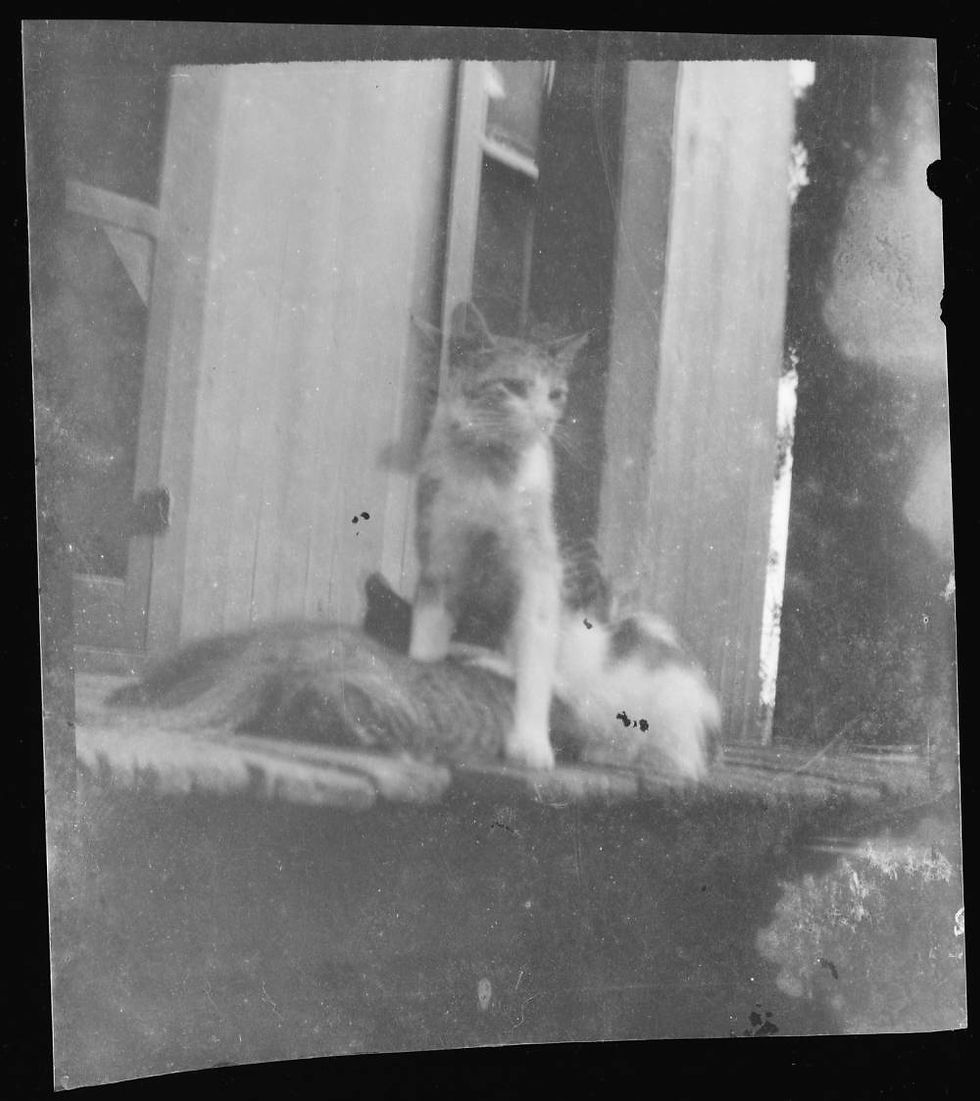
Cats are idlesome creatures—and always have been. From the Turner Family Collection, Springfield-Greene County Library.
I
is for
idlesome
Adjective
Lazy; slothful.
J
is for
jolt from Solomon's cradle
Phrase
Wisdom or intelligence, generally used in the negative to imply that someone lacks sense or forethought.
The gentleman on the left in this 1940s cartoon by Art Omans, Jr. appears to have never received a jolt from Solomon's cradle. From the Art Omans Jr. Cartoon Collection, Springfield-Greene County Library.
Election judge Juanita Blevins shows Sue Henderson how to fill out a ballot inside of a Nixa voting booth. If someone peeked at your ballot, you could shout: "Kill your own snakes!" Photograph by John Montre. From the Springfield News-Leader Collection, Springfield-Greene County Library.
K
is for
kill your own snakes
Phrase
To mind one's own business.
L
is for
Laplander
Noun
Someone who lives on the Missouri-Arkansas border, especially the Missouri Bootheel, where Missouri "laps over" into Arkansas.
Historically, the Missouri Bootheel was sometimes referred to as "Lapland," because it's where Missouri "laps over" into Arkansas. The inhabitants of this region were consequently called Laplanders. Map from Hammond's Superior Atlas and Gazetteer of the Worldby C. S. Hammond & Co., Inc. Image altered by Local History & Genealogy staff.
Part of the milking stars, better known as Orion, set over Springfield, Missouri. Photograph by Brandon Broughton, 2026. Image altered by Local History & Genealogy staff.
M
is for
milking stars
Noun
The constellation Orion, which is said to be especially prominent at milking time (early morning, pre-dawn).
N
is for
noodle
Verb
To catch fish with the hands.
A word to the wise: In addition to being illegal in Missouri and elsewhere, noodling is considerably more dangerous than other forms of fishing. Stick to the rod and reel!
We can presume that the angler pictured here, Roy Burns, did not noodle for this massive bass. From the Postcards and Photographs Collection, Springfield-Greene County Library.
A recently mustered soldier is about to get ozarked in this 1945 cartoon by Betty Love. From the Betty Love Cartoon Collection, Springfield-Greene County Library.
O
is for
ozark
Verb
To cheat, defraud, or swindle.
P
is for
poot the rug
Phrase
To die.
Despite it all, the chicken in this Charles Frederick cartoon has yet to poot the rug. From the Charles Frederick Collection, Springfield-Greene County Library.
An equestrian quill-wheels through Wilson's Creek National Battlefield in this 1978 photograph. Photograph by Tim Mullikin. From the Tim Mullikin Collection, Springfield-Greene County Library.
Q
is for
quill-wheel
Verb
To move about or patrol a large area.
R
is for
rabbit-twister
Noun
A rustic person; someone who lives in the backwoods.
As change came to the rural Ozarks, Birdle Mannon kept to the old ways, living alone in her small Taney County cabin—a proud and contented rabbit-twister. Photograph by Bob Linder. From the Bob Linder Collection, Springfield-Greene County Library.
Scadoodles of chickens look on as Barry County Agent M. B. Carpenter inspects a feed line at the Raymon Norman farm. Photograph by Betty Love. From the Springfield News-Leader Collection, Springfield-Greene County Library.
S
is for
scadoodles
Noun
A very large number or a very large amount.
T
is for
tree-top
Verb
To land a fish with unnecessary force, throwing it into the tree-tops.
Verb
To perform a task with more vigor than is needed.
This young Springfieldian angler, the daughter of Diane Spade Campbell, looks ready to do some tree-topping. Photograph by Diane Spade Campbell. From the Springfield News-Leader Collection, Springfield-Greene County Library.
Springfieldian Nell C. Milligan was an up-and-gone woman, travelling across Europe, Africa, Asia, and New Zealand following the death of her husband in 1919. From the Nell Crane Milligan Collection, Springfield-Greene County Library.
U
is for
up-and-gone
Phrase
Restless, prone to wander about.
V
is for
vigrous
Adjective
Vicious; dangerous.
Don't be fooled; this cheetah cub at the Dickerson Park Zoo assuredly grew up to become a vigrous critter. Photograph by Springfield News-Leader staff. From the Springfield News-Leader Collection, Springfield Greene-County Library.
Sure, you could call this machine a steam derrick—but wouldn't you rather say willipus-wallipus? Photograph by Mike Condren. From the Mike Condren Collection, Springfield-Greene County Library.
W
is for
willipus-wallipus
Noun
A vague legendary monster.
Noun
A large piece of machinery.
X
is for
Xyleborus sporodochifer
Noun
A species of lichen-producing fungus native to the Missouri Ozarks.
If it wasn't obvious, this word does not come from Randolph and Wilson's book. Too bad the pioneers didn't play the xylophone.
These small, white fruiting bodies, or sporodochia, are characteristic of the elegantly-named Xyleborus sporodochifer. Photograph by Richard Clinton Harris. Image courtesy of Ozarklichens. License: https://creativecommons.org/licenses/by-nc-sa/3.0/.
Ozarkians once referred to the white-breasted nuthatch as the yank, possibly due to the resemblance of its blue plumage to the uniforms worn by soldiers of the Union Army during the Civil War. Photograph by Miles Barnhart. Image courtesy of iNaturalist. License: https://creativecommons.org/licenses/by-nc/4.0/
Y
is for
yank
Noun
The white-breasted nuthatch (Sitta carolinensis).
Z
is for
zephyr
Noun
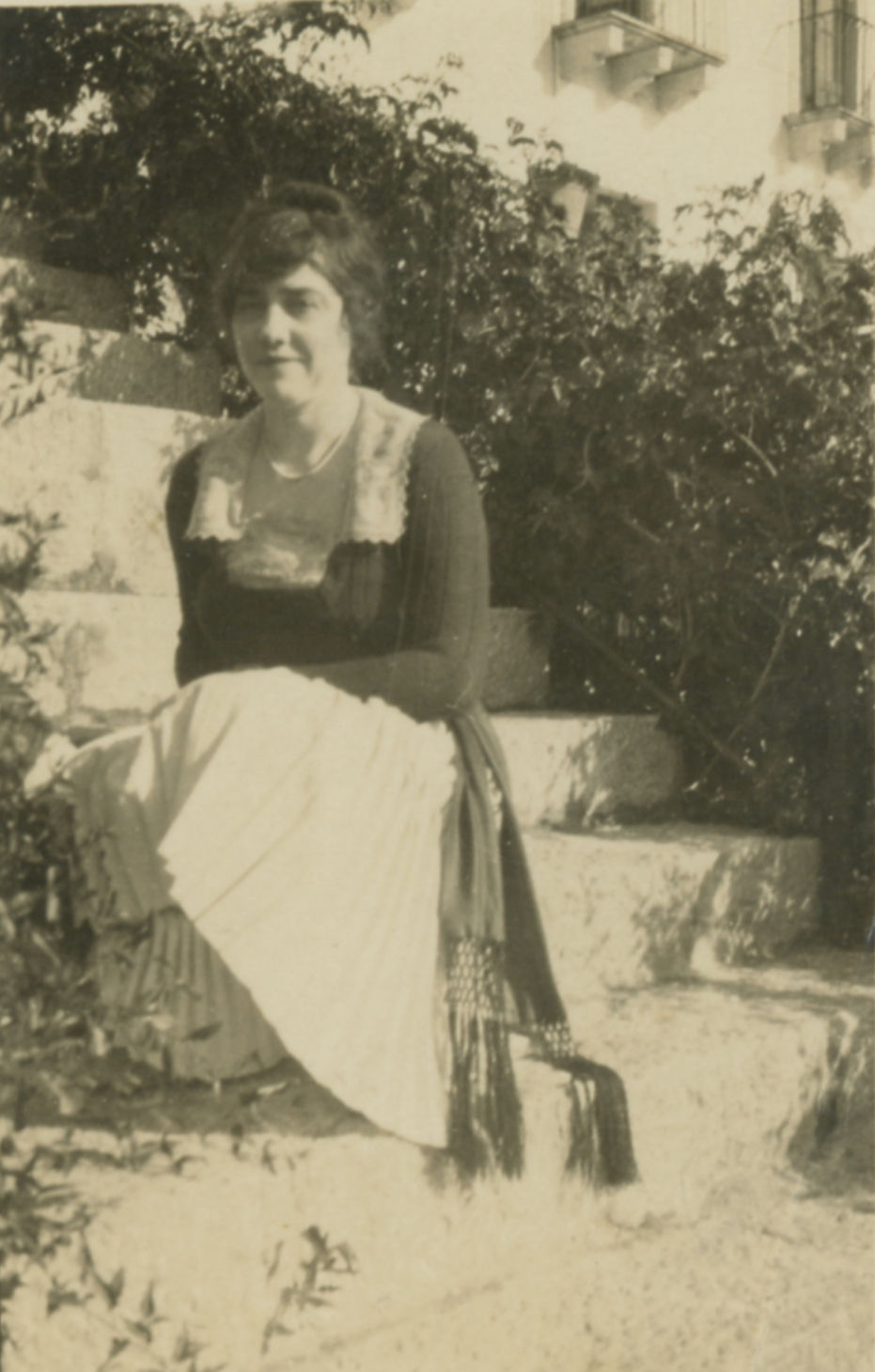
A woman's wrap or scarf; usually knitted or crocheted and worn over the head and shoulders.
The woman in white sitting in the first row of this group portrait is wearing what could be described as a zephyr. From the Turner Family Collection, Springfield-Greene County Library.
If you enjoyed this article, please consider making a donation to the Preserving Ozarks History Endowment. Each contribution supports Local History & Genealogy's mission of preserving the history and culture of the Ozarks.