

Native Wildflower Seeds at Your Library

Updated: Apr 25
Several native wildflowers are perfectly adapted to the spectrum of conditions found in the Ozarks. They thrive in our climate and soil, and require little fertilizer or irrigation.
Introducing native plants and wildflowers into your garden can help support Ozarks wildlife. Songbirds, butterflies, bees, and other pollinators are especially reliant on native plants for food and shelter. If turning your lawn into a Missouri prairie isn’t your style, container gardens and border gardens still support ecological diversity and beautify the environment.
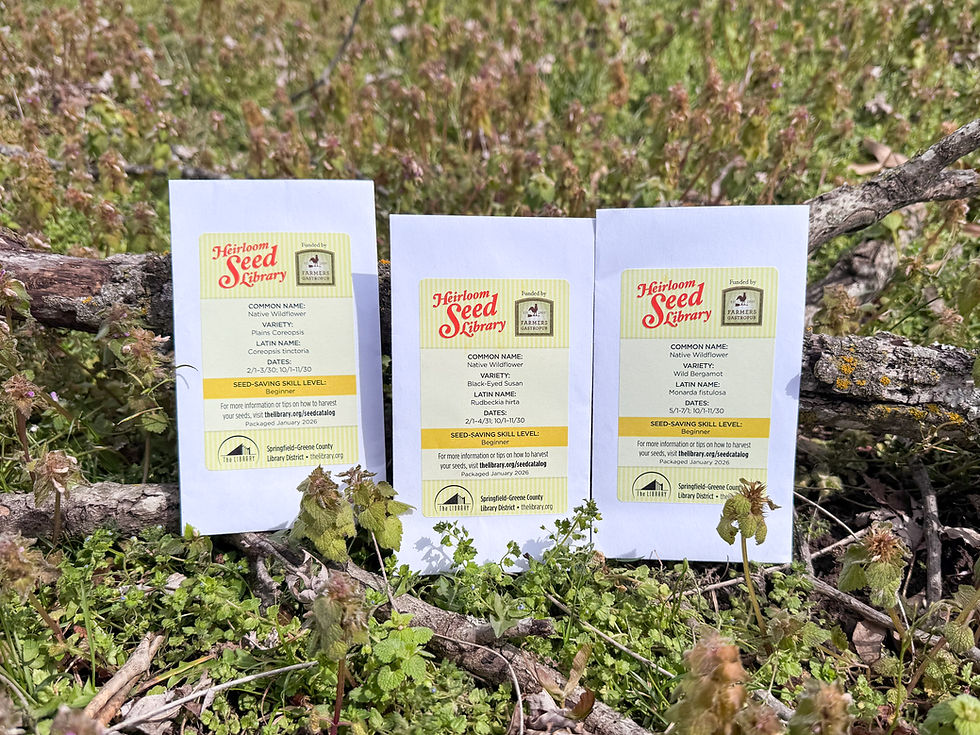
If you’re interested in growing native Ozarks plants, the Springfield-Greene County Library can help you get started! The Heirloom Seed Library has an extensive catalog of seeds available for checkout, including vegetables, herbs, flowers, and greens. Check out the Heirloom Seed Library’s webpage or call your library branch for more information.
The native wildflowers listed below are appropriate for beginner gardeners and are organized by planting method. Each of these flowers can be grown using seeds from the Heirloom Seed Library. You can find these seeds and more available for checkout at:
Cold Stratification
Many plants, including several of those listed below, germinate in response to the cold conditions of winter. If you choose to sow or plant your seeds in the spring, you may need to mimic winter-like conditions through cold stratification. You can cold stratify your seeds with common household materials such as paper towels, coffee filters, and Ziploc bags. Click here to learn more about cold stratification methods.
Seeds that are sown or planted in the fall will not require cold stratification, as lower winter temperatures will naturally activate germination.
Surface Broadcasting
Surface broadcasting simply means throwing seeds over a large area of lightly-tilled soil. This method of planting is similar to how plants naturally drop their seeds.
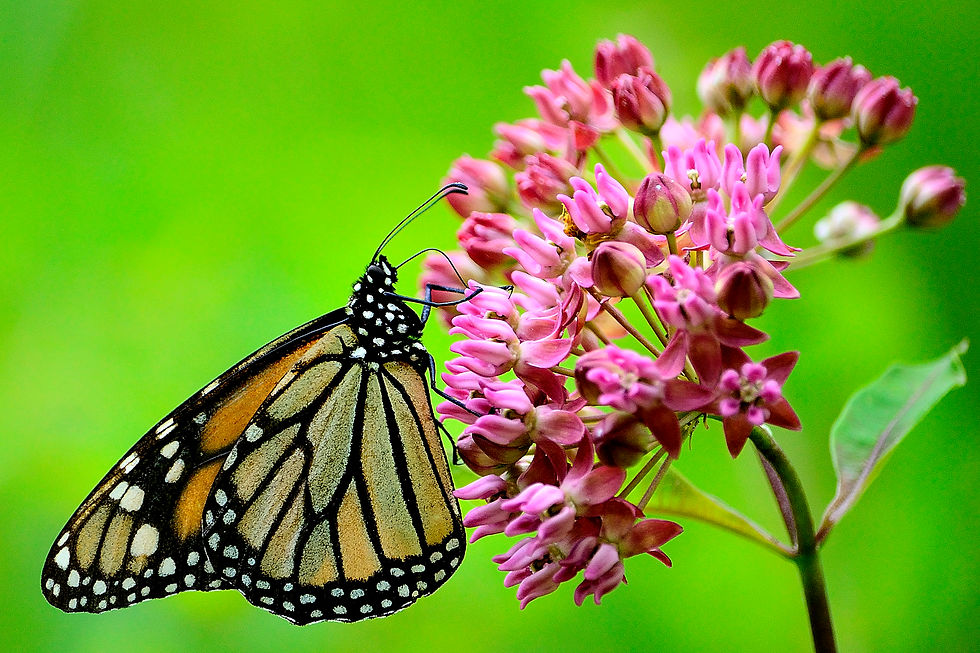
Common milkweed
Asclepias syriaca
Common milkweed is well-known for attracting monarch butterflies, who lay their eggs on the plant. Hummingbirds and other pollinators also rely on common milkweed as a food source. This wildflower blooms from late spring through summer. Milkweed can spread quite aggressively, so plant with caution.
Sow October 1 to November 30.
Seeds can be sown in spring if cold stratified for six weeks.
Surface broadcast to 1/16” deep.
Full sun.
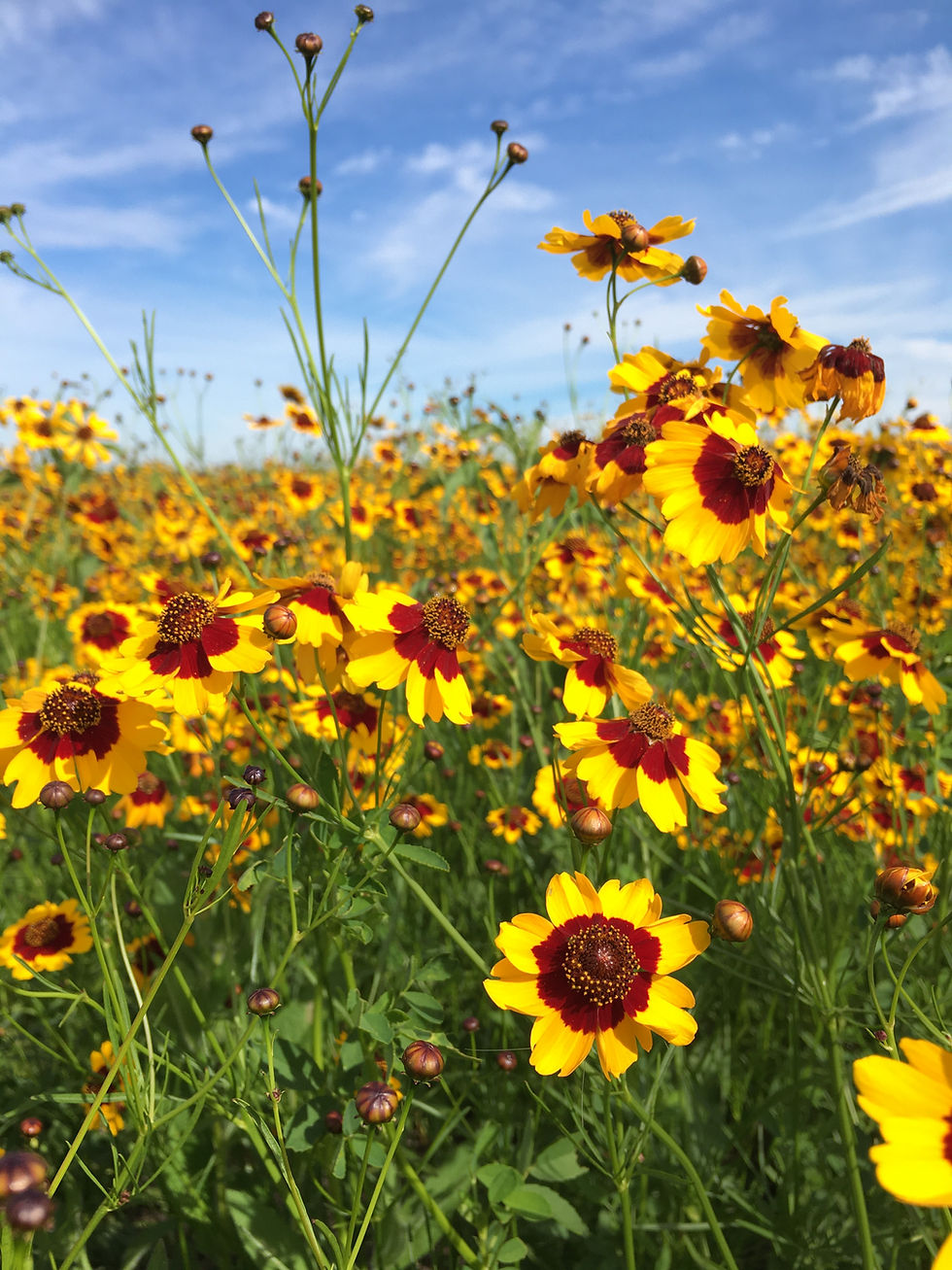
Plains coreopsis
Coreopsis tinctoria
According to the Missouri Botanical Garden, this wildflower is commonly found west of the Mississippi River. In Missouri, it’s often found along roadsides and railroad tracks. It grows between two and four feet tall and features one to two inch blooms.
Sow February 1 to March 30; October 1 to November 30.
Cold stratification not required for spring planting, but will improve germination.
Surface broadcast to 1/16” deep.
Full sun.
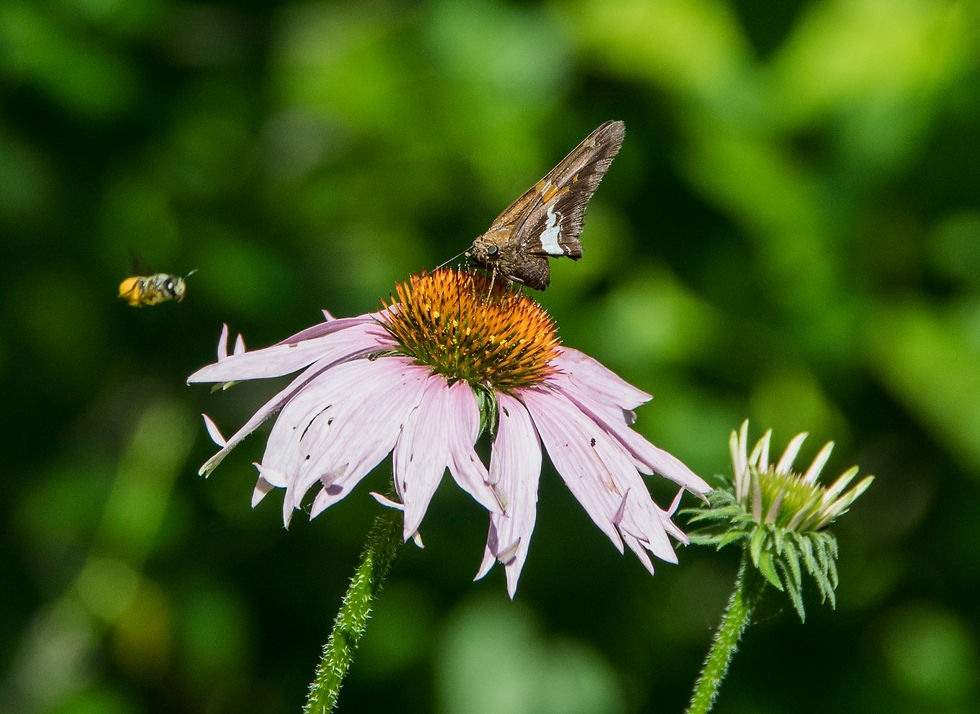
Purple coneflower
Echinacea purpurea
Purple coneflowers typically grow to between two and four feet tall and feature daisy-like flowers up to five inches in diameter. These flowers bloom through the summer. If the dried flower heads are left on their stems through the winter, the seeds can provide food for birds such as goldfinches.
Sow February 1 to March 30; October 1 to November 30.
If sowing in spring, cold stratify for six weeks.
Surface broadcast to 1/16” deep.
Full sun.
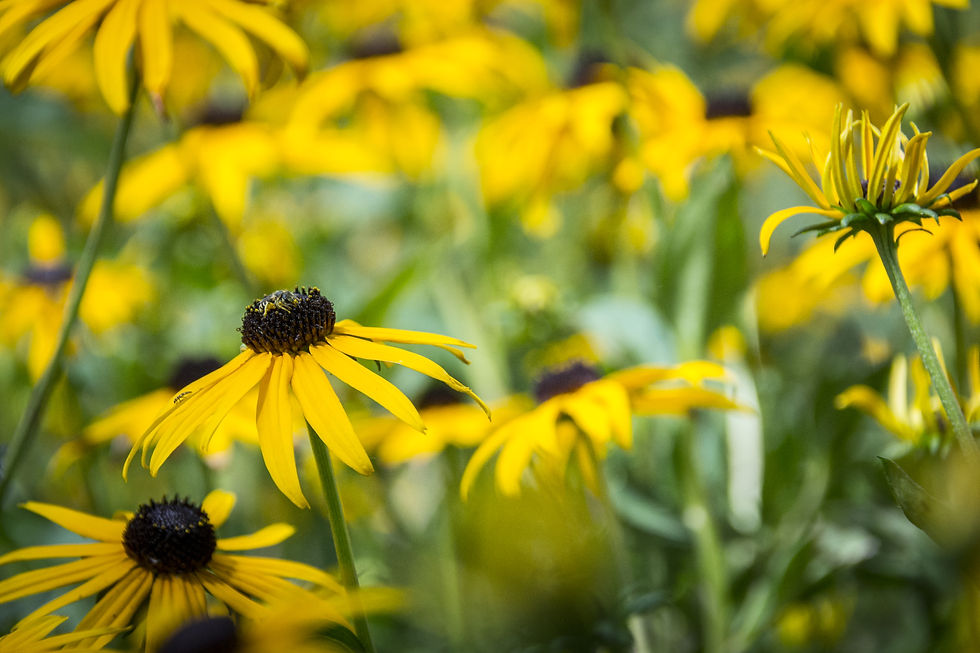
Black-eyed Susan
Rudbeckia hirta
While black-eyed Susans can grow in a range of conditions, they prefer moist, well-drained, and organically rich soil. Black-eyed Susans grow to between one and three feet tall, and their three-inch, daisy-like blooms come in throughout the summer.
Sow February 1 to April 30; October 1 to November 30.
If sowing in spring, cold stratify for thirty days.
Surface broadcast then press lightly into soil. Keep seeds moist.
Full sun.
Direct Planting
For larger seeds and varieties that need space between each plant, direct planting is recommended. These seeds need to start deeper in the soil than the wildflowers listed above.
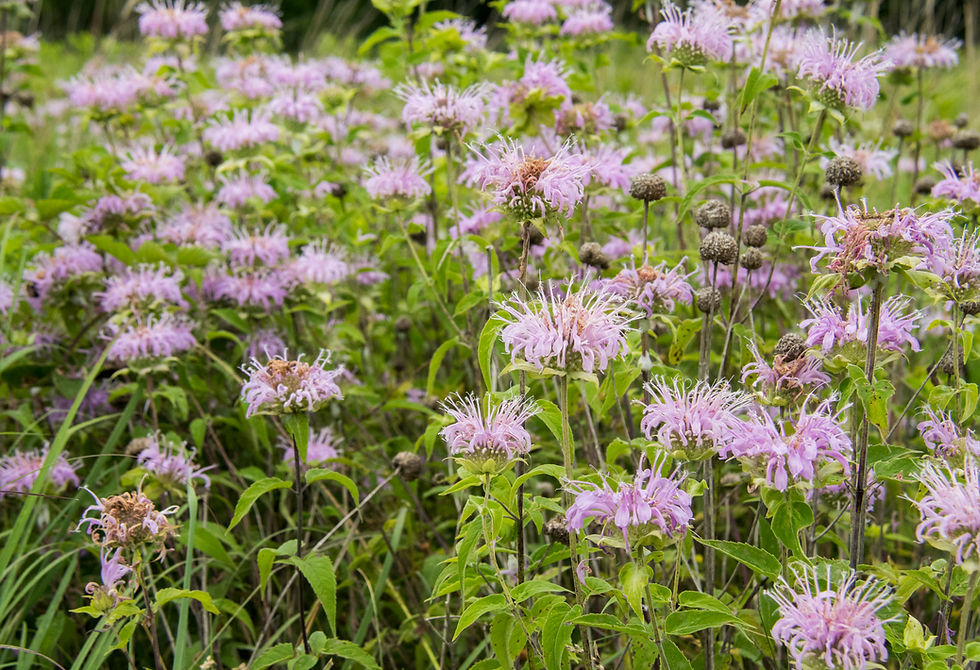
Wild bergamot
Monarda fistulosa
It’s a common misconception that wild bergamot is what provides the flavor of Earl Grey tea—that bergamot is actually an unrelated orange tree. However, some have used wild bergamot’s four-inch leaves to make medicinal teas. Wild bergamot grows between two and four feet tall and attracts bees, butterflies, and other pollinators.
Plant April 1 to July 1; October 1 to November 30.
If planting in spring, cold stratify for three months.
Plant 2.5” to 3.5” deep, 2” apart.
Full sun to partial shade.
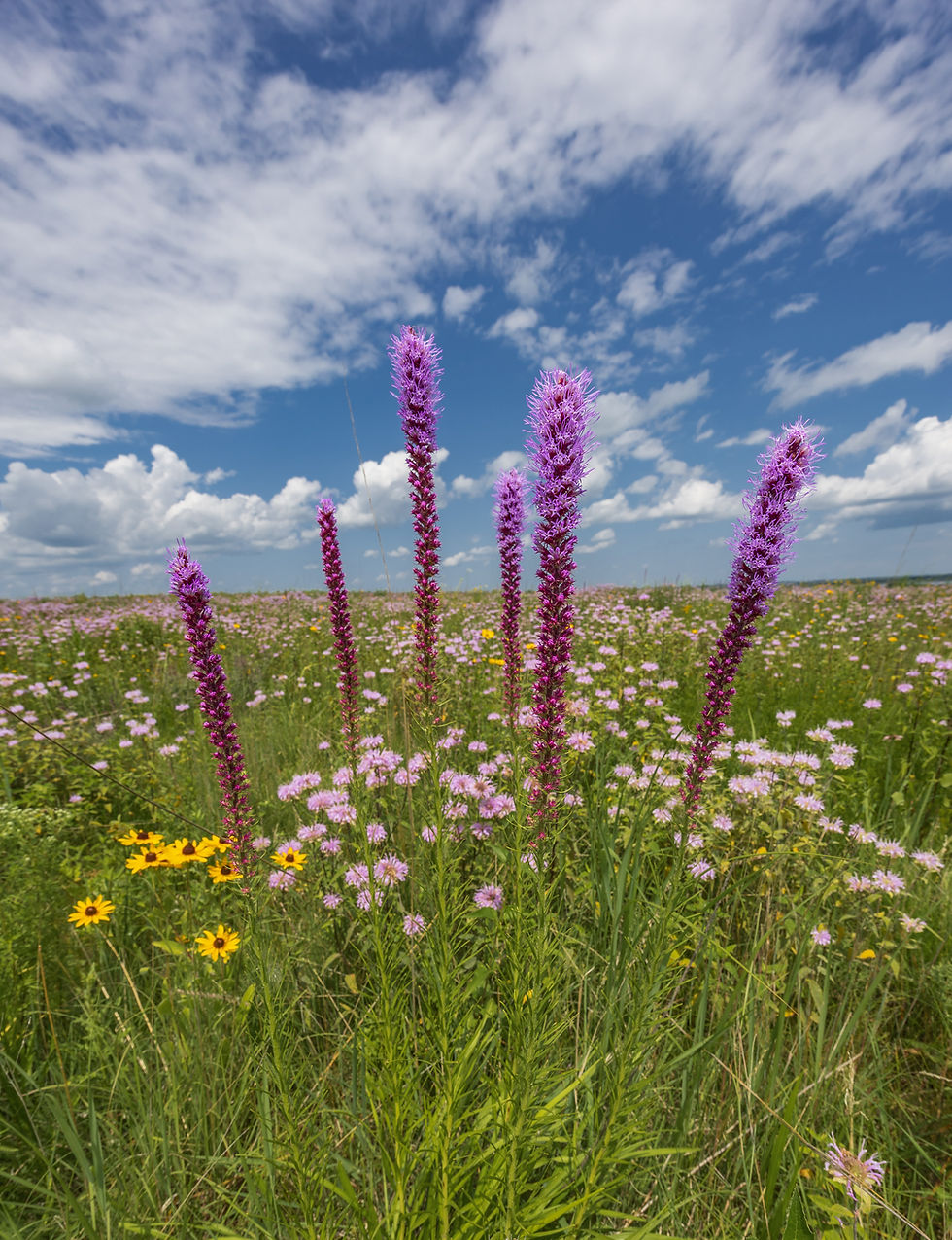
Prairie blazing star
Liatris pycnostachya
Prairie blazing stars typically grow between two and four feet tall, but can sometimes reach up to five feet. They bloom in summer, with their fluffy flowers attracting pollinators and their small seeds attracting songbirds.
Plant after last frost, April 1 to August 1.
Cold stratify for six to eight weeks.
Plant 2” to 4” deep, spaced 12” to 15” apart. Full sun.
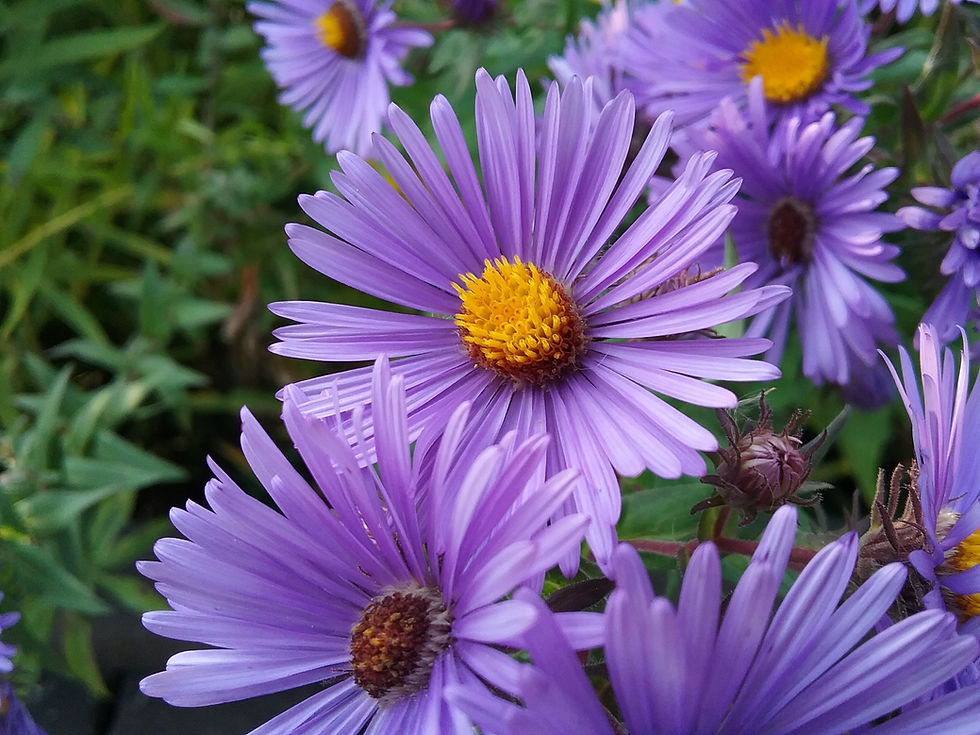
New England aster
Symphyotrichum novae-angliae
The purple "petals" of this plant are actually individual flowers known as ray florets. The New England aster is ecologically significant, providing food for birds and insects through its seeds and nectar. It is also an important part of the traditional medicine of various Indigenous American groups.
Plant March 19 to October 15.
If planting in spring, cold stratify for six weeks. Plant in rows 24" apart.
Full sun.
Resources for Gardening with Native Plants
If you’re interested in starting your own native wildflower garden, or looking for more information on native plants, there are many local organizations who have made their garden guides available online. Many host webinars, workshops, or have online plant databases.
The Springfield Botanical Gardens hosts events, classes, and exhibits throughout the year. You can find information about their many gardens on their website.
Grow Native!, a marketing and education program of the Missouri Prairie Foundation, is full of resources on the native plants of the lower Midwest. Their website features a list of members providing native plants and a native plant database.
The Missouri Department of Conservation's website holds a wealth of information on how native plants can be incorporated into your garden, as well as how native plants thrive in our area.
The Missouri Master Gardener's website lists upcoming events and classes related to gardening.
The Shaw Nature Reserve in St. Louis, in partnership with the Missouri Department of Conservation, has digitally published an extensive guide to native landscaping.
The Missouri Botanical Garden's plant finder tool is especially helpful for locating information about specific plants.
If you enjoyed this article, please consider making a donation to the Preserving Ozarks History Endowment. Each contribution supports Local History & Genealogy's mission of preserving the history and culture of the Ozarks.
Want more local history news and stories delivered directly to your inbox? Sign up for Local History & Genealogy's newsletter and email announcements.
Acknowledgements
A special thanks to Ashley Fillmer and Gina Marie Walden of the Springfield-Greene County Library's Heirloom Seed Library Committee for their guidance regarding the content of this article.