
The Lost Villages of the White River

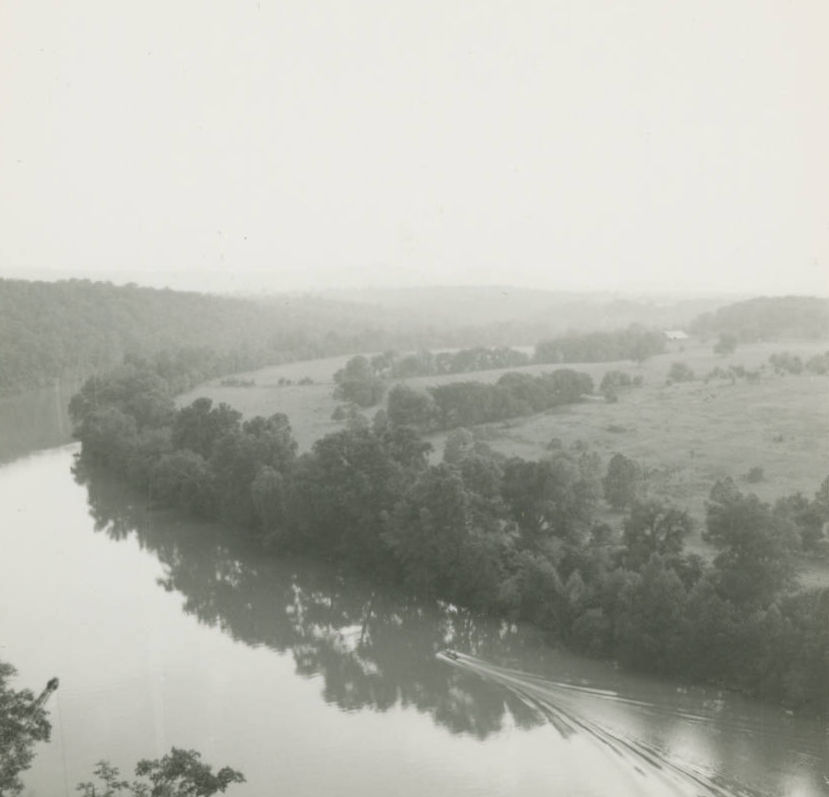
Oasis, Missouri, was a quiet little village nestled in a valley of the Ozark Mountains. Its people farmed the fertile soil, chatted at the general store, and walked the sandy shore of Long Creek—and one woman wrote for the local paper, the Taney County Republican. Columnist and poet Mary Elizabeth Mahnkey lived in Oasis for much of her career. In her writing, Oasis is vibrantly alive, and is just as much a character as her fellow villagers.
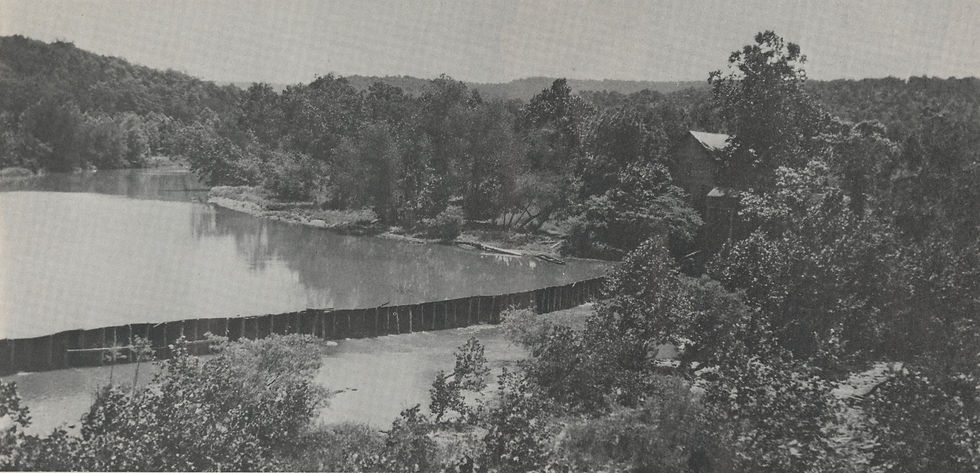
Mahnkey's record of life in Oasis is especially valuable given that few people can visit the settlement today. For nearly seventy years, the village has lain submerged beneath Table Rock Lake, under a hundred feet of water. The currents have long since swept away the handful of buildings that made up Main Street. Stone foundations and a one-lane bridge are all that remain of Oasis, Missouri.
Simple, Commonplace Things
In 1935, Mahnkey won a writing contest held by Country Home Magazine, which dubbed her "the country's best newspaper correspondent." As part of her prize, she was given a trip to New York City, where she was interviewed by reporters. The city was vastly different from her sleepy Oasis. If Oasis was a pond, New York was a sea of people.
An account of Mahnkey's trip to New York can be found in Ben Divin's article on the Local History & Genealogy blog, "The Country's Best Newspaper Correspondent."
Ellen Gray Massey's biography of Mahnkey, A Candle Within Her Soul, includes Mahnkey's account of her interview in New York. "What news is there to write about with only twenty-seven people in your town?" one reporter asked. "What do you write about?"
Mahnkey laughed. "If any stranger came in," she said, "or anybody moved or a baby was born or died, that was news... If something I could write would brighten up the columns or make someone laugh or please some little child or some old, old person, I'd try to do that... First, for example, I'd tell about Willie Knowlton's three little girls. They picked sixty gallons of huckleberries. Think of that! And then in his little old Ford truck he carried the berries all the way to Springfield on mighty crooked, rough roads, and sold them for fifty cents a gallon. That's what I call news. Huckleberries are awfully little."
"That isn't really news," another reporter said. "It's just simple, commonplace items."
"Simple? Commonplace? Yes, of course they are. But there is beauty in simple things."
Mahnkey may have been thinking of one of her own poems, written a year before, when the reporters called her writing "simple":
I Have Found Beauty
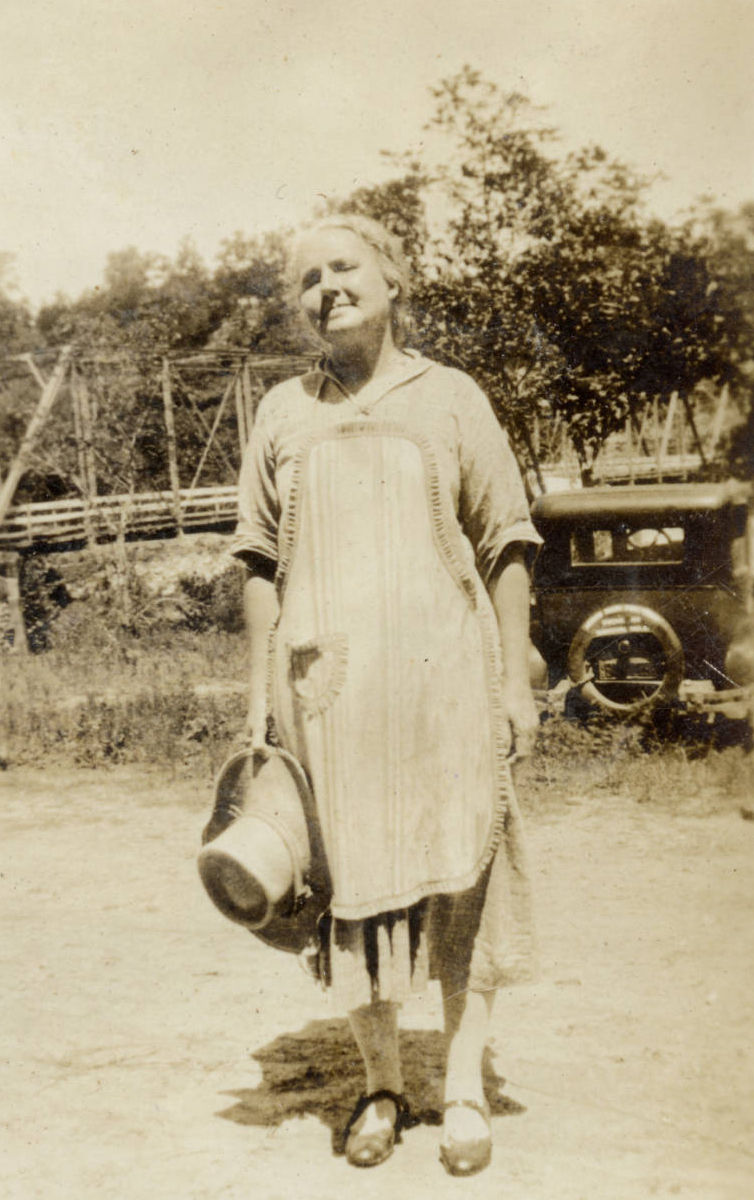
I have found beauty In commonplace things, In a blue gingham apron
With crisply tied strings,
In freshly washed windows
With checked curtains brief,
In the mottled rose gray
Of a frost-bitten leaf,
Ruby red velvet
In a tiny toad stool,
Silky green plush
In a polliwog pool.
After a few seconds of silence, another reporter spoke. "I understand that Oasis may be flooded if the proposed Table Rock Dam is built. Do you write about that?"
"Only now and then," Mahnkey said. "There's been speculation on the dam for years, and it will be a long time off before it is built, years probably. But my husband and I realize that Oasis will be gone some day. Already the town is being abandoned. We sold our store and moved into Forsyth."
Since 1902, there had been talk of building a dam on the White River. Heavy rains often flooded Cedar Valley, where Long Creek ran along the bottomlands and through the village of Oasis. A dam would control flooding and create predictable shorelines around other towns in Taney and Stone counties at the expense of permanently submerging Oasis.
The Mahnkey family lived in Oasis from 1922 to 1935. The village boasted a post office, a general store, a mill, a church, and a one-lane bridge with no roads on either side. Mary Elizabeth and her husband, C. P. Mahnkey, ran the Oasis general store and mill, where neighbors came with their grain.
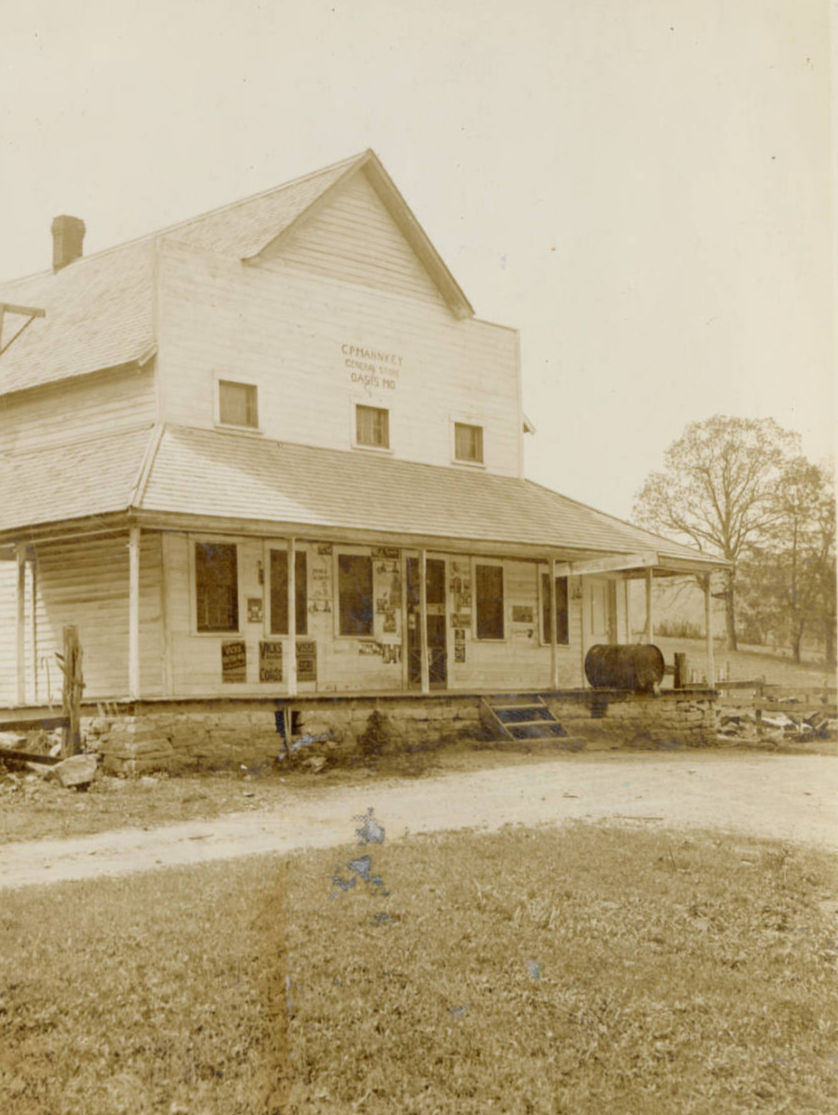
Mary Elizabeth's writing beams with love for daily life in a village steeped in Ozark folkways. This untitled poem from A Candle Within Her Soul paints a picture of joyful, carefree living in Oasis:
When Andy Youngblood comes to the mill
In that old truck of his'n
The neighbor kids all pile in too,
And then they go a-whizzin'
Down to the old Oasis mill
On Long Creek's sandy shore,
Where they swim and hunt for pawpaws,
And then they swim some more.
I wish I was a little kid
Out on that pleasant hill,
To ride with Andy in his truck
When he goes to the mill.
The Mule and the Motorist
But the world outside of the valley was changing. The automobile was becoming commonplace, and highways replaced many of the "mighty crooked, rough roads" that wound through the Ozarks. The one-lane bridge over Long Creek was connected to Highways 86 and 65, leading tourists through Oasis on the way to Blue Eye. Mary Elizabeth Mahnkey wrote the poem "Priority" about the bridge:
Priority
There's a twickety-twock on the bridge
Uncle Andy is coming to mill
On the old gray mule, so steady and true
From over yan side of the hill.
The old gray mule lays back his ears
At the sound of a motor horn,
And a rich powerful car whines down to a creep
Trailing the mule and the corn.
Serene, undismayed, Uncle Andy rides on,
Secure in his right-of-way
"Let 'em toot, Let 'em cuss,
I'm furst on the bridge,
And I'm goin' to mill today!"
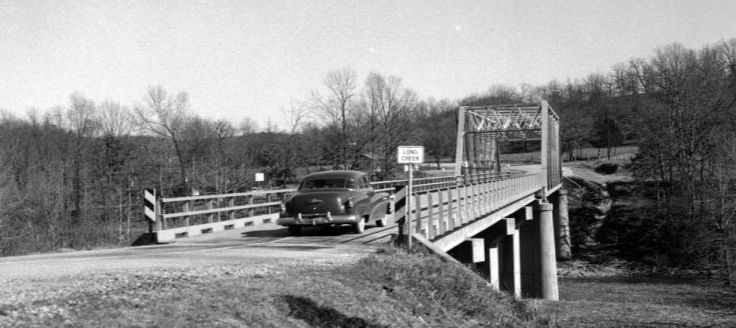
On the surface, the poem is about a man and his mule refusing to yield the right-of-way to an impatient motorist. But it also speaks to how changes in the Ozarks were pushing out people who were content with the old ways. Another of Mahnkey's poems, "My Farm's Not For Sale," expresses a similar sentiment.
My Farm's Not For Sale
"My farm's not for sale"
Said ole Jep Brown
"Ye'll never ketch me
A-movin' to town.
I got a thousand
Bearing fruit trees
Better each day
With frost and with freeze."
"Of course they're jest persimmons
And down in the draws
To make big fat possums
Fox grapes and black haws."
"I've got sorghum and biskits
Corn in my cribs
Shoats in the pen
A-makin spare ribs."
"No, my farm's not for sale"
Said old Jep Brown
"I'd sure starve to death
If I moved to town."
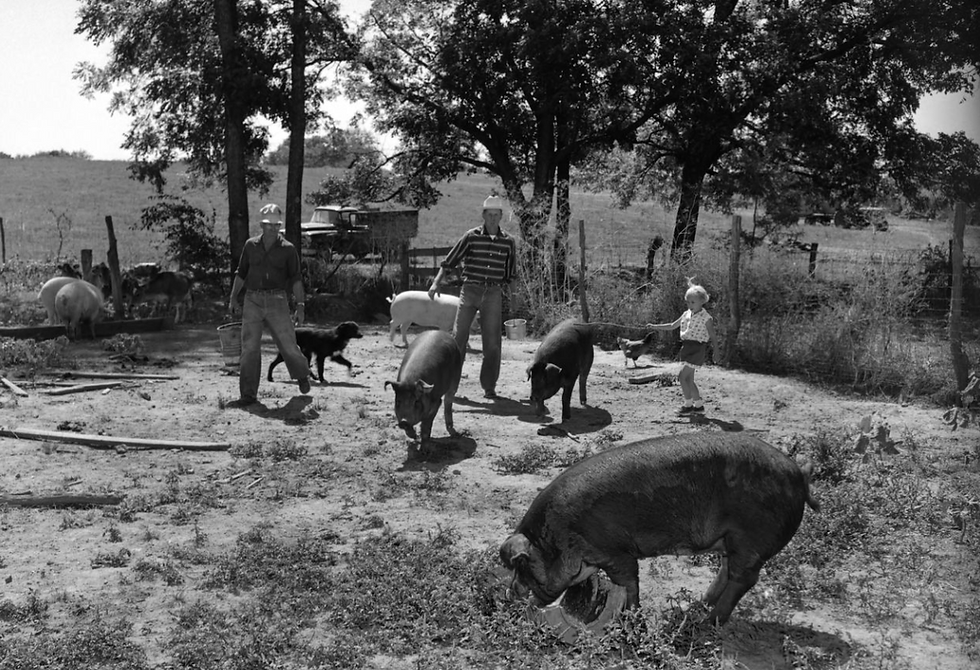
Despite her fondness for the village, Mahnkey and her husband ultimately left Oasis. In an interview published in A Candle Within Her Soul, she recalled: "The highway and the motor car were the death of small community stores. We sold Oasis. It was a hard trade to make, for Eychaners, who were buying the farm, store, and camp, also wanted our cows. I thought so much of our cows. We finally sold all of them but Buttercup."
The highway was only one factor in the Mahnkeys' decision to move. Their son, Douglas Mahnkey, had established himself as city attorney in nearby Forsyth, and helped his parents to buy a house in which he had previously lived with his wife, Merle. Mary Elizabeth wrote of the little hilltop house: "It is clean and sweet and beautiful. Seven rose bushes blooming–mocking birds singing. We moved there June 11, 1935, taking Buttercup with us."
Mary Elizabeth Mahnkey died in 1948, before both Oasis and Forsyth were flooded.
The Town About to Die
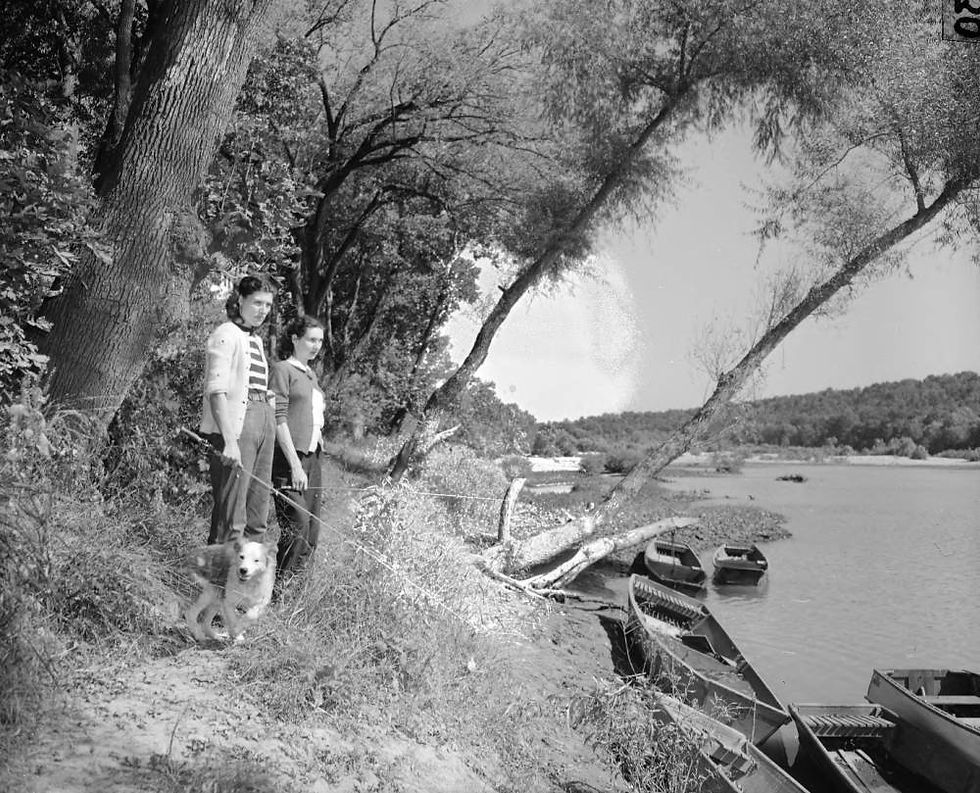
In the late 1940s, the people of Forsyth learned that their town would be submerged by the construction of Bull Shoals Dam, downstream in Arkansas. As a member of the city council, Douglas Mahnkey was instrumental in relocating the town's historic buildings to higher ground. In 1950 and 1951, homes and buildings were moved from "Old Forsyth"—today the site of Shadowrock Park—to "New Forsyth," located on the bluffs overlooking the river. During the move, Forsyth was called "the town about to die," according to photojournalists Cliff and Vi Edom.
According to a 1950 article in Springfield's Sunday News and Leader, the federal government paid for new roads and utilities in New Forsyth, and offered compensation to residents who would lose their businesses to the flooding. One such businessman was Wilbur Hicks, who made his living arranging float trips down the White River. Unable to operate from New Forsyth, Hicks sought damages from the government but was not satisfied with what he was offered for the loss of his home and livelihood.
Old Forsyth was flooded in July 1951. Many of its residents settled into new homes up the bluff in New Forsyth—today known simply as Forsyth.
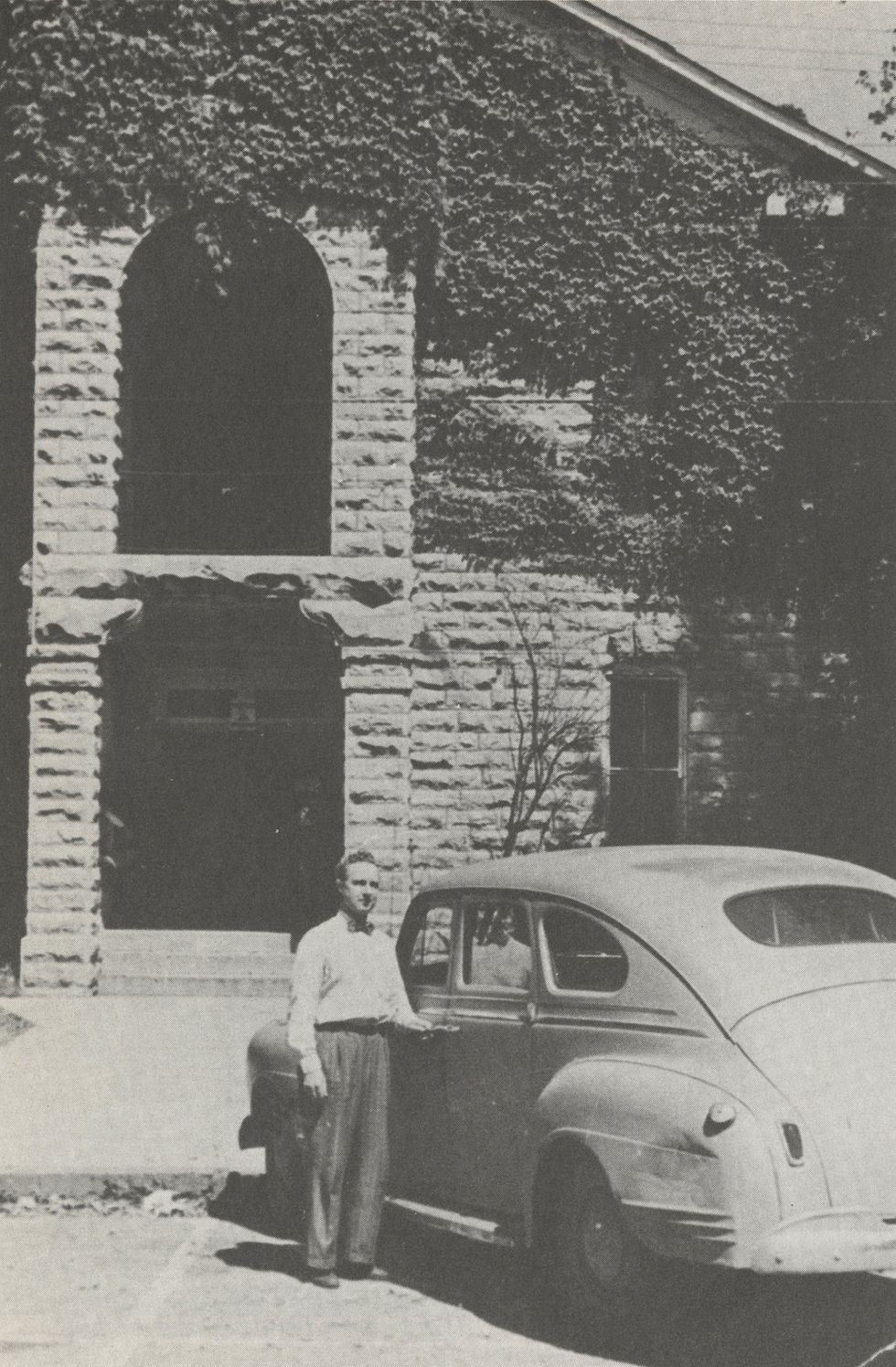
The town lost two historic buildings to the backwaters of Bull Shoals Dam. The Union Church, built in 1893 out of native stone, was not moved uphill. Damages paid to the city of Forsyth for the loss of the church totaled $10,000 (roughly $137,017 in 2026). The money went toward constructing a new church, in combination with funds raised by members of the community.
The 1855 Taney County Courthouse, where Douglas Mahnkey began his law career, was also inundated. In his book, Bright Glowed My Hills, Douglas captions a photograph of the courthouse succinctly: "It's gone now."
A Monument to a Woman's Courage
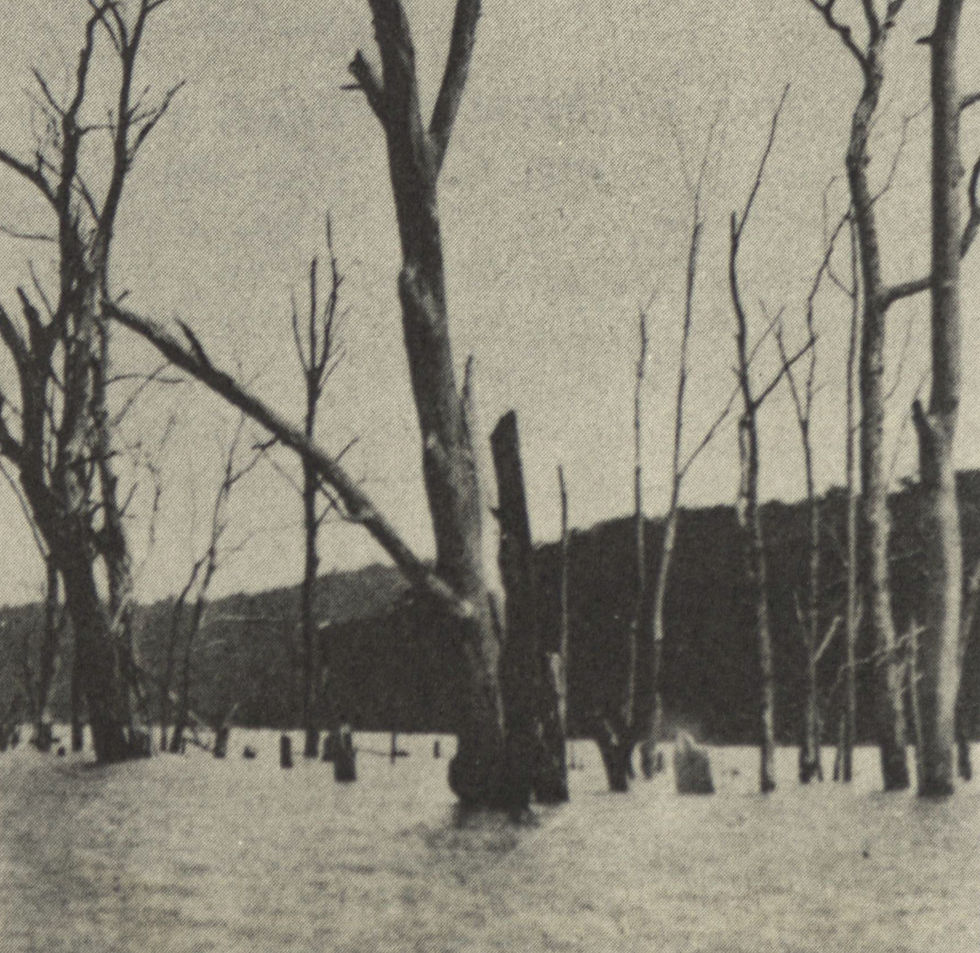
Old Forsyth was not the first White River settlement to vanish beneath lake water. Decades earlier, when Powersite Dam was nearing completion in 1913, a woman named Missouri Cook Casey refused to sell her land for less than what she believed it was worth. As her neighbors sold to the federal government, Casey held firm to her price. According to Cliff and Vi Edom's Twice Told Tales, Casey's was the last parcel purchased before the Ozark Power and Water Company could dam the White River. On May 10, 1913, she finally got her asking price. Eager to begin generating power with the state's first hydroelectric dam, the company activated Powersite just hours after Casey signed over her farm, leaving no time to cut down the timber on her land. The floodwaters rose quickly, leaving only the treetops standing above the new Lake Taneycomo.
The Casey farm's drowned woodland would come to be known as the Sunken Forest. According to Cliff and Vi Edom, it "punctured the surface of Lake Taneycomo" for years, "providing a fine spot for fishing" and serving as "an appropriate monument to a woman's courage." When Table Rock Dam was built, the once pleasant waters of Lake Taneycomo turned frigid, making the Sunken Forest unsuitable for diving. By the 1960s, the Sunken Forest had faded into local folklore. A stretch of road in Forsyth, Sunken Forest Drive, remains a testament to Missouri Cook Casey's determined perseverance.
Things Gained, Lost, and Overlooked
The water reached Oasis last. In 1957, Long Creek flooded and damaged much of the village. The following year, Table Rock Dam was completed, destroying what little was left.
Little House
O little house, why do you sigh
When gay spring winds come dancing by?
And then, sometimes I see you weep
For bright drops down your gray roof creep.
You weep because we go away
And you will be alone some day?
By most measures, the Ozarks have benefited from the damming of the White River. The Powersite, Bull Shoals, and Table Rock projects brought reliable electricity to the rural Ozarks, created jobs, prompted the construction of better roads, and left behind the recreational reservoirs that remain among the most popular tourist attractions in the Ozarks. However, those gains came at a tangible price, and traces of that exchange remain on lake beds in southwest Missouri.
Most small settlements disappear over time. Had the villages of Oasis and Old Forsyth not been flooded, would we still remember them as fondly? If Mahnkey had not written about her home with such fierce love, would we think of Oasis as anything more than a footnote in local history?
Much of what we know about the lost villages of the White River Valley only survives because somebody thought to document the simple, commonplace things that made these settlements worth living in. There is a wormy feeling that comes with trying to hold a whole place like Oasis in the mind; the sense that something was overlooked. Sometimes the missing thing can be found in a poem, written by someone pre-nostalgic for a village not yet lost. Sometimes it's a blue gingham apron with crisply tied strings—the kind of thing only a poet from Oasis would think to save.
If you enjoyed this article, please consider making a donation to the Preserving Ozarks History Endowment. Each contribution supports Local History & Genealogy's mission of preserving the history and culture of the Ozarks.
Want more local history news and stories delivered directly to your inbox? Sign up for Local History & Genealogy's newsletter and email announcements.
Resources
Divin, Ben. "The Country's Best Newspaper Correspondent." Springfield-Greene County Library Local History & Genealogy Blog, 7 Mar. 2025.
Edom, Cliff and Vi Edom. Twice Told Tales and an Ozark Photo Album with Emphasis on Taney County, Missouri. The Little Photo Gallery, 1983.
Mahnkey, Douglas. Bright Glowed My Hills. School of the Ozarks Press, 1968.
———. "Oasis on Long Creek." The Ozarks Mountaineer, vol. 20, no. 8, Sept. 1972, pp. 21; 36-7.
Mahnkey, Mary Elizabeth. Ozarks Lyrics: The Song Poems of the Ozarks. School of the Ozarks Press, 1972.
Massey, Ellen Gray. A Candle Within Her Soul: Mary Elizabeth Mahnkey and Her Ozarks (1877-1948). Bittersweet Inc., 1996.
Meier, Don. "Brand New Forsyth Is Now A-Building." Sunday News and Leader, 25 June 1950, pp. D3; D6.
Upton, Lucile Morris. "Ozarks' First Big Lake Reaches 50th Birthday." Sunday News and Leader, 10 Mar. 1963, pp. D1; D3.